

·
7 min read
On this page
What Persistent Memory Means for an Agent
Persistent memory is facts, preferences, and context that survive session boundaries. Without it, every agent session starts cold.
Three failure modes make this concrete.
A support agent asks a returning user for their account details on session four. The user answered those questions in session one. The agent has no record of it.
A coding agent asks about type annotation preferences at the start of every project conversation, regardless of how many times the developer has answered.
A research agent repeats a failed approach it tried last week because it has no log of what it attempted, why it failed, or what was tried instead.
Each of these is a stateless agent masquerading as an intelligent one. The fix is not an architectural rewrite. It is a question of whether the agent can write to and read from a store that persists between runs.
Why Credential Provisioning Blocks Autonomous Agents
Any cloud memory service requires credentials. Getting those credentials requires a human to open a browser, verify an email address, generate a key, and paste it into an environment variable. Ten to fifteen minutes for a developer doing it manually.
For an autonomous agent running unattended, impossible at step one. The agent cannot open a browser. It cannot receive email. It cannot click a confirmation link.
Teams land on two workarounds. Both are wrong.
Shared hardcoded key. All agents share one account, one project namespace, one memory store. Context from one user session bleeds into queries from another. Rotating the key takes down every instance that depends on it.
System prompt stuffing. Not memory. Context windows have ceilings. When the prompt template changes, accumulated context disappears. Past fifty facts, retrieval quality degrades. There is no semantic search.
The Agent-Native Path
mem0 init --agent --agent-caller "claude-code" --json Provisions a complete Mem0 credential set in under 5 seconds, with no email, no browser, and no human required.
Credentials are written to ~/.mem0/config.json. Each call creates an isolated (Organization, Project, APIKey) trio. Agent A cannot read Agent B's memories even when both run on the same host. Isolation is structural, not a configuration option.
claim_command is for when a human wants to attach their account. Running mem0 init --email [email protected] transfers ownership atomically. The key does not change. All memories stay intact.
Full documentation: docs.mem0.ai/platform/agent-signup
What Mem0 Gives Your Agent
Once provisioned, Mem0 gives the agent a cloud-hosted memory layer with semantic search. Here is what that means in practice.
Automatic fact extraction. When the agent calls client.add() with a conversation exchange, Mem0 does not store the raw transcript. It extracts structured facts: "User is building a FastAPI service with PostgreSQL," "User prefers TypeScript with strict mode." The agent stores a conversation; Mem0 returns a set of clean, retrievable facts.
If you're building a user-facing agent and want a deeper walkthrough of building an AI agent that remembers your users, see our guide.
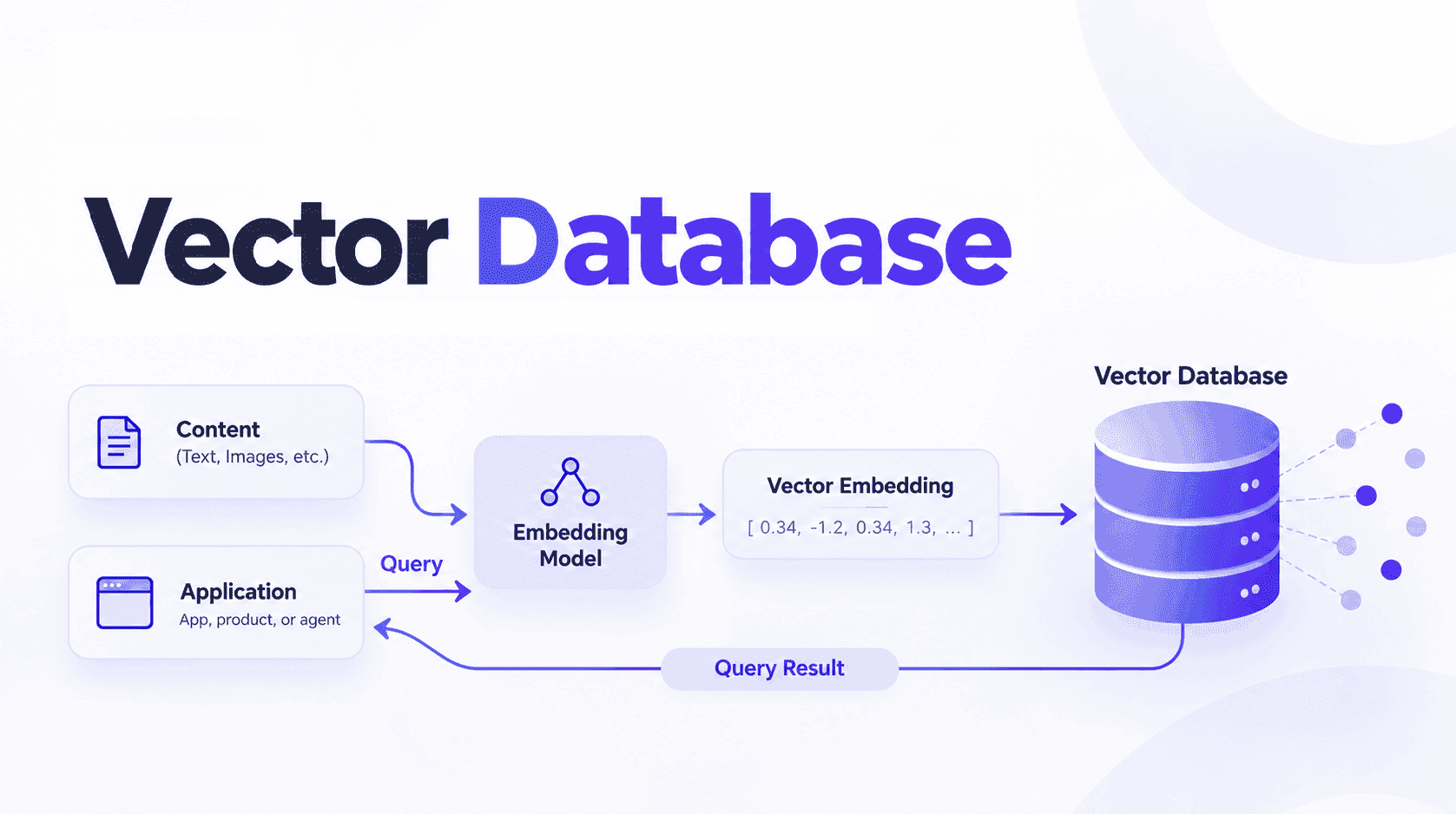
Semantic search with relevance scores. client.search("what stack is the user building?") Returns ranked results with a score field and auto-assigned categories. The agent does not have to do exact-match lookups or manage embeddings. Retrieval is vector-based and handled entirely by the service.
Cloud persistence across environments. Memories survive container restarts, CI teardowns, and machine changes. A coding agent running in a GitHub Actions job and a developer's local Claude Code session share the same memory store if they use the same key and user ID.
Per-agent isolation by default. Each Agent Mode key owns its own isolated project. No configuration needed to keep Agent A's memories separate from Agent B's.
MCP endpoint. The mcp_url returned on init plugs directly into Claude Code, Cursor, Cline, or any MCP-compatible client. The agent gets add and search as first-class tools without any SDK integration.
Full API reference: docs.mem0.ai/platform/quickstart
Where to Integrate
Coding agents in Claude Code or Cursor. Drop the mcp_url into the MCP server configuration. The agent gets memory as a native tool without any SDK code. On first run, mem0 init --agent --json provisions the key. Preferences, project context, and past decisions accumulate across every session.
LangGraph or CrewAI agents. Call mem0 init --agent --json at agent startup. Pass api_key to MemoryClient. Add a memory retrieval step before each LLM call and a storage step after. The rest of the framework stays unchanged.
CI/CD pipelines. An agent running in a headless pipeline can provision its own key on first run and store the key in CI secrets. Subsequent runs reuse the key. Memory accumulates across job runs without any human step.
On-demand agent spawning. Systems that create one new agent instance per user session can provision a key per agent at startup. Isolation is automatic. No manual project setup per agent.
Supported Environments
Install:
Mem0 CLI works in Claude Code, Cursor, Codex, Cline, Continue, Aider, Goose, and Devin Desktop (formerly Windsurf). The mcp_url from the init response drops directly into any MCP-compatible client's server configuration. Credentials are written to ~/.mem0/config.json.
Cost and Alternatives
Agent Mode provisioning is free. The free tier covers development and low-volume production with no card required, and paid tiers scale from there. Full breakdown on the pricing page.
Evaluating Mem0 against other memory layers? The comparison page covers retrieval quality, latency, and self-hosting.
Frequently Asked Questions
What is the easiest way to add persistent memory to an AI agent?
Runmem0 init --agent --json. It provisions an API key, a default user ID, and an MCP endpoint in under five seconds, with no browser, no email verification, and no human in the loop. Credentials are written to~/.mem0/config.jsonand reused on every subsequent run.Does this work with LangGraph and CrewAI?
Yes. Callmem0 init --agent --jsonat agent startup, pass the returnedapi_keytoMemoryClient, then add a retrieval step before each model call and a storage step after. No other part of the framework changes.Can I add persistent memory without writing SDK code?
Yes. Themcp_urlreturned on init drops straight into any MCP-compatible client's server configuration. The agent getsaddandsearchas native tools with zero SDK integration.How does this work in a CI/CD pipeline with no human present?
The agent provisions its own key on first run and stores it in CI secrets. Subsequent runs reuse that key. Memory accumulates across job runs with no manual setup step.Which coding agents and IDEs are supported?
Claude Code, Cursor, Codex, Cline, Continue, Aider, Goose, and Devin Desktop (formerly Windsurf). Any MCP-compatible client works, since integration happens through the standard MCP server configuration.What happens when a human wants to claim an agent-provisioned account?
Runmem0 init --email [email protected]. Ownership transfers atomically, the API key does not rotate, and every stored memory stays intact. Running agents keep working through the transfer.Is there a free tier?
Yes. Agent Mode provisioning is free and the free tier covers development and low-volume production without a card. See the pricing page for limits and paid tiers.
Mem0 is an intelligent, open-source memory layer designed for LLMs and AI agents.
If you are a human: Get your free API key at app.mem0.ai
If you are an agent:
Or self-host from our open source GitHub repository
More on Agent Memory

How to Read Memory Benchmarks
How to read AI memory benchmarks: what LoCoMo, LongMemEval, BEAM, and agentic tests measure, where scores go wrong, and how to find the correct benchmark for your use case.
20 min read

The Problem After Retrieval: Why Agents Misuse the Memories They're Given
Five papers show LLM agents often misuse the memories they retrieve. What the research says, how much to trust it, and what builders can do.
13 min read

What Is Memory Staleness in AI? Causes, Risks & Solutions
Understand memory staleness in AI agents, why outdated information leads to errors, and the best techniques to maintain accurate long-term memory.
9 min read



Start building with memory
Free tier, no card