

·
13 min read
On this page
When you build AI systems, you rarely face a single "memory" problem. You need to balance context window limits against database latency and privacy governance.
This article explores the mechanical differences between ephemeral context (short-term) and persistent indices (long-term) for machine learning engineers and infrastructure architects. The key differences between memory types can mean the difference between a toy demo and a production-grade application.
What is AI memory?
AI memory is the set of mechanisms that allow a model to persist, retrieve, and update information across tokens, turns, or sessions. It is the bridge between a stateless inference engine and a stateful user experience. These mechanisms allow AI applications to function effectively over extended periods.
We can organize memory types into a hierarchy that mirrors human memory:
Sensory input buffer: The immediate raw tokens being processed.
Short-term context: The fleeting working memory limited by the model's context window.
Long-term store: The unbounded, persistent index of knowledge that exists outside the model weights.
Consolidation: The background processes that move data from short-term to long-term storage.
For a deeper look at this topic, see the What is AI memory explainer.
Short-term vs. long-term memory in AI
This table highlights the distinct yet complementary roles you must care about.
Aspect | Short-term memory | Long-term memory |
|---|---|---|
Primary role | Hold immediate context and recent tokens. | Store persistent knowledge and historical data across sessions. |
Typical size | Small to medium (8k to 128k tokens). | Large, unbounded (GBs to TBs) for storing vast amounts of data. |
Latency requirement | Very low (sub-millisecond) for real-time responses. | Higher latency acceptable (100ms+) for retrieval. |
Representation | Raw tokens or attention values. | Indexed embeddings, documents, graphs. |
Update pattern | High frequency, ephemeral writes during a single session. | Low frequency, persistent updates. |
Eviction strategy | FIFO, LRU, token trimming. | Merge, summarization, archival. |
Failure modes | Visual truncation, primacy/recency bias. | Staleness, index drift, privacy leakage. |
Common infra | Context buffers, Redis caches. | Vector databases, Search Indexes, S3. |
Unlike short-term memory, long-term memory persists indefinitely. This is the foundational difference that dictates all downstream architectural choices.
What are the types of memory?
We must define terms precisely to avoid ambiguity.
Short term memory in AI refers to the in-context learning capabilities of a large language model. It is bound by the architecture's context window. As detailed in the paper "Lost in the Middle: How Language Models Use Long Contexts" by Liu et al., models do not access this memory uniformly. Information placed in the middle of a long context window is often ignored compared to information at the start or end. This makes memory a finite resource that requires strict memory management.
Long-term memory is the externalization of state into a durable storage system. This pattern is well illustrated in "Generative Agents: Interactive Simulacra of Human Behavior" by Park et al., where agents maintain a comprehensive record of experiences to recall past experiences. In production, this usually looks like a vector database or a graph store that decouples knowledge retention from inference costs.
Episodic memory records specific events and past interactions (e.g., "User uploaded a PDF yesterday"). It is chronological. See the dedicated guide on episodic memory for AI agents for more depth.
Semantic memory stores facts and concepts (e.g., "Python is a programming language"). It is often derived from accumulated knowledge. See the dedicated guide on semantic memory for AI agents for more depth.
Procedural memory stores learned behaviors and "how-to" knowledge (e.g., "To restart the server, run command X"). This allows an AI agent to perform tasks automatically. See the dedicated guide on procedural memory for AI agents for more depth.
Short-Term Memory
You interact with short term memory every time you append a message to an messages array in an OpenAI API call.
Characteristics of short-term memory in AI
Short-term memory lives in the "hot" path of your application. It is strictly synchronous. If your memory retrieval lags, your time-to-first-token lags. Because it sits directly in the active context, every byte of short-term memory you use costs you money on every inference pass. It is ephemeral by default. When the ongoing conversation ends, this memory vanishes unless you explicitly save it.
Common implementations
Context sliding windows: You keep a fixed buffer of the last N turns of conversation history. Newest messages push oldest messages out.
Token budgeting: You actively count tokens and prune messages based on heuristics.
KV Cache: On the inference server side, the Key-Value cache stores attention matrices to speed up generation.
Use cases
Slot filling: Collecting parameters for an ongoing task over multiple turns.
Reference resolution: Understanding what "it" refers to in the user input "buy it now".
Instruction adherence: Maintaining the persona or rules defined in the system prompt to ensure coherent responses.
Challenges
The primary failure mode is context truncation. When a conversation exceeds the window, you must delete relevant information. This often leads to "catastrophic forgetting" within a session. Another issue is the attention sink phenomenon, where irrelevant preambles consume attention budget that should be allocated to the user's latest query.
Long-Term Memory
Long-term memory is how you build relationships rather than just transactions. It allows AI systems to recognize patterns over months or years.
Characteristics of long-term memory in AI
This memory is asynchronous and indexable. It does not live in the inference chain. Instead, you use retrieval mechanisms (RAG) to pull relevant details into the context window only when needed. It effectively gives your model infinite storage for background details, but at the cost of retrieval complexity. The foundational approach here is detailed in "Retrieval-Augmented Generation for Knowledge-Intensive NLP Tasks" by Lewis et al.
There's also a governance dimension worth naming directly: short-term memory is relatively tolerant of unverified or low-quality input, since anything wrong expires with the session. Long-term memory is not. A bad fact written into a persistent store doesn't just sit there; it gets retrieved again and again with high similarity confidence, compounding rather than expiring. This is why production long-term memory systems need more than a storage layer; they need the same kind of provenance and freshness discipline typically associated with data governance. See the guide on AI agent memory governance for a fuller treatment of this.
Common implementations
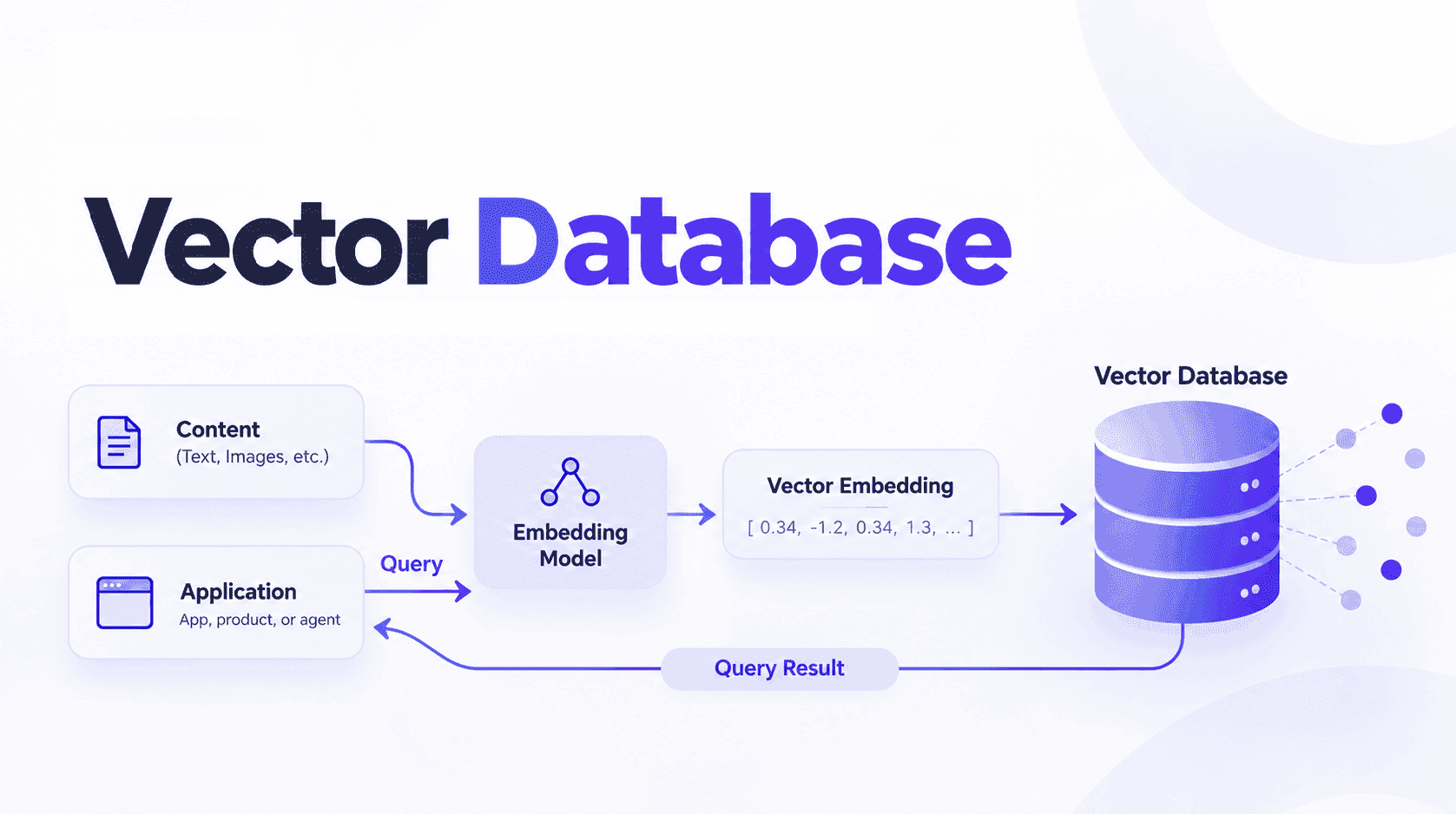
Vector databases: Storing dense embeddings of text chunks in databases like Qdrant or Pinecone.
Knowledge graphs: Storing entities and relationships (e.g., "User" -> "PREFERS" -> "Python") to capture structured facts.
Document stores: Keeping raw JSON blobs of user profiles.
Use cases
Personalization: Remembering user preferences and personal preferences like coding style or dietary restrictions.
Grounded QA: Answering questions based on a corporate knowledge base.
Agentic planning: Autonomous agents using past experiences to avoid repeating mistakes in multi-step tasks.
Challenges
Retrieval precision is the hard limit here. If your search returns irrelevant chunks, you pollute the context with noise, increasing hallucination rates. Staleness is another silent killer. If a user updates their address, but your memory systems keep the old embedding, the model will confidently generate the wrong answer.
How do AI agents combine short-term and long-term memory?
Most production systems need both. You need the immediate continuity of short term memory and the deep recall of long term memory. These two have complementary roles in achieving optimal performance.
Architectural patterns
The standard pattern is a "write-through" cache.
Ingest: User sends a message.
Short-term write: Message appends to the session buffer.
Check: System queries the long-term index for relevant information and injects it into context.
Generate: Model responds.
Consolidate: An async worker analyzes the chat history. If valuable facts are found ("My name is Sarah"), it extracts them and writes to the long-term index.
How does Mem0 solve AI memory?
Mem0 is a universal AI memory layer that handles this orchestration. Instead of writing custom glue code to move data between Redis (short-term) and a Vector DB (long-term), Mem0 offers a single API. It automatically manages the hot capabilities of episodic storage and the cold storage of semantic memory to help you maintain context and remember user preferences.
Mem0 also uses a Graph Memory architecture that captures relationships between entities, going beyond simple vector similarity to understand structured knowledge.
How do you implement memory for an AI agent?
Use this checklist when building your agent memory subsystem.
Data model and schemas
Do not just dump raw text. Wrap every memory artifact in a structured format (JSON) that includes:
content: The text payload.created_at: UTC timestamp.learned_patterns: Tags for categorized behaviors.embedding: The vector representation.
Vectorization pipeline
Standardize your embedding model early. If you switch from OpenAI to Cohere later, you must re-index vast amounts of data. Batch your embedding requests to avoid rate limits. Normalize your vectors if using dot product similarity to process data efficiently.
Indexing strategies
For large datasets (under 100k vectors), a flat index is fast and accurate. For scale (1M+ vectors), use HNSW (Hierarchical Navigable Small World) indexes. They trade a small amount of accuracy for massive speed gains and energy efficiency.
Eviction and consolidation policies
Do not keep everything. Implement a "Least Recently Used" (LRU) policy for short-term buffers. For long-term storage, use a "relevance score" to periodically prune low-value memories. If a memory has not been retrieved in 6 months, move it to cold storage.
Consistency and concurrency
You will face race conditions. If two user requests arrive simultaneously, they might both try to update the session state. Use optimistic locking or atomic database operations (like Redis WATCH) to ensure you do not overwrite data.
Cost and observability
Monitor your "context utilization". If you consistently fill 90% of your context window with retrieved memories, your costs will explode. Track "retrieval relevance" by logging how often users reject the model's answer when memory was used.
How do you evaluate retrieval mechanisms and memory performance?
You cannot improve what you do not measure.
Latency P99: Track the time it takes to retrieve memory. It should stay under 200ms.
Recall at K: If the answer was in your database, did it show up in the top 5 results?
Precision at K: How many of the top 5 results were actually useful?
Factuality: Use a secondary fine-tuned grader LLM to verify that the generated answer matches the retrieved facts.
How do you handle user preferences and privacy in memory systems?
Memory is a liability. Storing user data creates privacy risk.
Access control: Implement Row-Level Security (RLS). Ensure User A can never retrieve vectors belonging to User B. Mem0 handles this natively with user namespaces.
Data minimization: Only store what is needed to answer future questions.
Right to be forgotten: When a user asks to delete their data, you must delete the raw logs and the vector embeddings. This is hard to do if you do not track lineage.
What do conversational AI and agentic memory architectures look like?
Minimal architecture: A simple Python script using a local dictionary for history and a local FAISS index for retrieval. Good for prototypes of conversational AI.
Production architecture: A FastAPI service using Redis for short-term session state and Qdrant for long-term storage. An async Celery worker processes completed sessions to extract facts (using Mem0) and update the graph.
Research leaders: Follow the work coming out of Google DeepMind and OpenAI on "infinite context" and "neural memory". They often set the direction for the next year of engineering patterns in agentic AI.
What are the common memory management pitfalls and how do you avoid them?
The "Save everything" Trap: Storing every "hello" and "thank you" dilutes your index. Use a filter to only save substantive, specific tasks.
Naive eviction: Blindly chopping off the start of a conversational context deletes the system prompt. Always pin the prompt.
Ignoring privacy: Storing PII (Personally Identifiable Information) in vectors makes it hard to audit. Anonymize data before embedding it.
Conclusion
The separation of ephemeral context from durable indices is the only way to build AI applications that feel coherent over time. Short-term memory gives you conversational fluency within a single session. Long-term memory gives you the ability to recognize patterns and apply knowledge across extended periods. Together, they form the complete term memory in AI that modern agentic AI requires. Start with a solid short-term buffer, but plan your long-term strategy before your users hit the context limit.
Frequently Asked Questions
Q. What approach should a developer take to retrieve an AI agent's short-term memory when using MongoDB?
Store conversation turns and retrieve them using a session ID, sorted by timestamp. Each turn gets written as a document tagged with the session identifier, and retrieval queries filter on that same ID and order by timestamp to reconstruct the conversation in the correct sequence before it's serialized into the next prompt.
Q. What is the primary purpose of a sliding window memory strategy in a multi-turn agent?
To retain only the most recent N messages, ensuring immediate context is always available. Older messages fall out of the window as new ones arrive, which keeps token usage bounded and predictable, at the cost of losing access to anything outside that window unless it's been extracted into structured state separately.
Q. Which type of memory poses the greatest privacy risk in an agentic AI system?
Long-term memory, because it persists personally identifiable information from individual interactions over time rather than letting it expire with the session. A stray detail mentioned once in short-term context disappears when the session ends; the same detail written into long-term memory stays retrievable indefinitely unless something explicitly updates or deletes it.
Q. What is the role of long-term memory when a user returns after weeks with no new conversation?
It acts as a persistent storage layer that remains accessible across multiple sessions and threads. The context from weeks ago isn't held in any active session buffer by that point; it's been written to durable storage and gets retrieved on demand when the new session starts, which is what lets the agent pick up where things left off instead of starting from zero.
Q. How is Mem0 different from Redis for agent memory?
They operate at different layers and are often used together rather than as alternatives. Redis is a fast in-memory key-value store, a strong fit for short-term session state that needs sub-millisecond access. Mem0 is a full memory layer: it extracts durable facts from conversation, stores them for long-term retrieval, and handles semantic search, deduplication, and entity linking, capabilities Redis doesn't provide on its own. A common production pattern uses Redis for the short-term session buffer and Mem0 for the long-term index, exactly as described in the architecture pattern above.
Q. Do I need both short-term and long-term memory, or can one work alone?
Most production agents need both. Short-term memory alone means the agent forgets everything the moment a session ends, no matter how coherent it was within that session. Long-term memory alone, without a short-term buffer, means every single turn requires a retrieval round-trip even for context from two messages ago, adding unnecessary latency to the immediate conversation. The two are complementary, not substitutes for each other.
More on Agent Memory

How to Read Memory Benchmarks
How to read AI memory benchmarks: what LoCoMo, LongMemEval, BEAM, and agentic tests measure, where scores go wrong, and how to find the correct benchmark for your use case.
20 min read

The Problem After Retrieval: Why Agents Misuse the Memories They're Given
Five papers show LLM agents often misuse the memories they retrieve. What the research says, how much to trust it, and what builders can do.
13 min read

What Is Memory Staleness in AI? Causes, Risks & Solutions
Understand memory staleness in AI agents, why outdated information leads to errors, and the best techniques to maintain accurate long-term memory.
9 min read



Taranjeet Singh
Taranjeet is the co-founder of mem0. His work centers on a question most LLM teams hit but few solve well: how do you give an agent durable, structured memory without ballooning context windows or sacrificing latency? His writing focuses on the practical architecture of memory-augmented agents, the tradeoffs between long context and retrieval, fact extraction at scale, schema design for episodic memory, and why benchmarks like LoCoMo and MemGPT often show such different results in lab vs production environments. He has spoken on these themes at the AI Engineer Summit, LangChain's Interrupt, and other developer conferences.
Start building with memory
Free tier, no card