

·
22 min read
On this page
“Most multi-agent AI systems fail not because agents can’t communicate, but because they can’t remember.”
That line from Mikiko Bazeley’s analysis on the MongoDB blog captures the core problem of multi-agent memory architecture. You can have the best orchestration framework, the strongest base model, and well-designed tool calls, but none of it matters if your agents operate on different versions of reality because they lack a shared memory architecture.
Single-agent memory (one agent not retaining context across sessions) is largely solved, and for some use cases, that is enough. In fact, not every multi-agent workflow needs shared memory. If agents are doing one-off, isolated tasks, persistent memory is overhead. Multi-agent memory becomes essential once agents must collaborate on the same evolving state, persist decisions across steps/sessions, or scale in parallel without duplicating and contradicting work.
Most teams I talk to are stuck at the next stage. The coordination layer between multiple agents is where production systems break down, and it is where memory engineering becomes necessary. In this article, I’ll tell you all about it.
A multi-agent memory architecture is the infrastructure that governs how multiple AI agents store, retrieve, share, and coordinate context within a system. It ensures that agents operating in parallel all work from the same version of shared state, rather than maintaining separate, conflicting views of the world.
TLDR;
Single-agent memory is about one agent retaining context across sessions. Multi-agent memory is the harder problem. How do multiple agents share, coordinate, and stay consistent with each other as a system?
36.9% of multi-agent failures come from inter-agent misalignment, according to Cemri et al. That means agents ignoring, duplicating, or contradicting each other’s work. Better models will not fix this. The failures are structural.
Three architecture patterns work in practice. Centralized (one shared store, simple but bottlenecks past “N” agents), distributed (private stores with selective sync, scalable but consistency is painful), and hybrid (what most production systems actually use).
The missing foundation is memory engineering. Not prompt engineering, not context engineering. You need to design how agents share state before you write the first line of agent code.
Mem0 handles this through four scoping dimensions (user, session, agent, application) so each agent sees only what it needs. The tradeoff is that scoping decisions are hard to change later, so get them right early.
What is a multi-agent memory architecture?
A multi-agent memory architecture is the infrastructure that governs how multiple AI agents store, retrieve, share, and coordinate context within a system. It ensures that your planning, coding, and review agents all operate on the same version of the codebase without duplicating work or contradicting each other.
To put it in context, the single agents you use manage memory based on the CoALA framework. CoALA describes how a single agent manages memory:
Working memory holds the active context that the agent is processing right now
Long-term memory stores episodic knowledge (past experiences)
Semantic knowledge (facts), and procedural knowledge (reusable skills and code).
Multi-agent memory starts where CoALA ends, because CoALA was designed for a single agent talking to a single user.
I’ve built systems with CoALA where three agents were individually excellent but collectively useless because each one maintained its own view of the project. CoALA simply does not address what happens when your agents all need access to the same project state, or when two agents update the same fact differently, or when one agent needs to know what another agent already tried and failed.
The solution to this problem is what Mikiko Bazeley’s analysis calls memory engineering, the practice of designing persistent, structured memory infrastructure that multiple agents can write to, read from, and coordinate through. If prompt engineering is “write better prompts,” and context engineering is “feed the right context to one agent,” memory engineering is designing a shared memory layer that multiple agents can safely use together.
In the systems I build, memory engineering is where I spend most of my architecture time now. I’ve found out the hard way that getting memory wrong breaks everything downstream, regardless of how good your individual agents are, and most teams I talk to haven’t reached this stage yet.
Why do multi-agent systems fail without shared memory?
The failure rates are worse than you’d expect.
Cemri et al. analyzed over 1600 execution traces across seven popular multi-agent frameworks, including MetaGPT, ChatDev, and Magentic-One. Failure rates ranged from 40% to over 80% depending on the framework and task. The paper’s MAST taxonomy identified 14 distinct failure modes, with 36.9% of failures caused by inter-agent misalignment.
That 36.9% falls into inter-agent misalignment. Shared memory does not eliminate this category, because misalignment can also come from goal specification drift, tool/schema mismatches, orchestration bugs, or role confusion. But it does remove the most common structural source of misalignment: agents acting on incomplete, stale, or mutually invisible state.
Work duplication
I once traced a 40-second multi-agent workflow where a research agent and a planning agent independently called the same API three times each. Neither agent could see the other’s results. Six redundant calls, six sets of tokens burned, and the pipeline took twice as long as it should have.
Shared memory with basic deduplication would have reduced that to a single call. Multiply this across hundreds of runs per day, and I realized I was lighting money on fire.
Inconsistent state
In every multi-agent customer service system I have built, this was the first bug users reported. The customer-facing agent tells a user their order shipped while the fulfillment agent still shows that order as processing. Both agents are technically correct based on their own context windows, but the user sees a company that cannot keep its story straight.
Communication overhead
Without persistent shared memory, agents fall back to passing full conversation histories to each other on every turn. The Google ADK blog calls this “context dumping”: large payloads placed directly into chat history that create a permanent cost tax on every subsequent message.
I have watched token costs climb linearly with conversation length in systems built this way. A ten-turn workflow costs roughly ten times as much as the first turn because every agent re-reads everything every other agent has already said.
Cascade failures
This one keeps me up at night, literally. One agent hallucinates a single detail, and that detail gets passed downstream as context while the next agent builds on it. By step five of a twelve-step chain, your entire pipeline is operating on a fictional premise.
I spent two days debugging a system where the root cause was a hallucinated API response format in step two. Every downstream agent treated it as ground truth and produced a confidently wrong output. Shared memory with validation checkpoints would have caught the bad data before it propagated.
Cemri’s research found that interventions through improved prompting and orchestration yielded only modest accuracy gains of 14 to 15 percentage points. So better base models alone will not fix these problems, because the failures are structural. You need to change how your agents share information, not just how well individual agents perform.
How are multi-agent memory architectures designed?
This problem resembles what computer chip designers figured out years ago. When you have multiple processors, you need rules for how they access and share data. Yu and Zhao made this comparison directly, mapping agent memory into three layers. An I/O layer for raw inputs, a cache layer for compressed context and embeddings, and a memory layer for full history and long-term storage.
If you have ever tuned L1/L2/L3 cache behavior on a high-performance system, the design intuitions transfer cleanly.
Three architecture patterns have emerged. Which one you choose depends on how many agents you are running, how sensitive your data is, and how much consistency you need. But under the hood, most real designs are constrained by a single triangle: latency, consistency, and cost.
If you optimize for consistency, you typically pay in latency (more coordination, locking, validation, consensus) and often in cost (more reads/writes, more checkpoints, more compute).
If you optimize for latency, you usually relax consistency via caching or eventual sync, which can reintroduce misalignment when agents read stale state.
If you optimize for cost, you compress or prune memory aggressively, which can hurt retrieval quality and force agents to “re-derive” what they previously knew.
Cache layers exist because full history recall is too expensive, and I’ve realized that multi-agent memory needs the same design thinking. You have to decide what must be strongly consistent and immediately visible, what can be eventually consistent, and what should be ephemeral in working memory. The patterns below are really different points on that triangle.
More recent research has started tackling this from different angles: MIRIX (Wang & Chen, 2025) partitions memory across six specialized types coordinated by a multi-agent controller, and LatentMem (2026) explores compressing shared context into latent representations rather than raw text. Separately, a newer failure-mode taxonomy specific to governed shared memory, “Governed Shared Memory for Multi-Agent LLM Systems” (Margalit et al., 2026), identifies four failure modes distinct from Cemri et al.’s general MAST categories: unauthorized leakage, stale propagation, contradiction persistence, and provenance collapse, worth knowing if your multi-agent system spans multiple tenants or trust boundaries, not just multiple agents.
Dimension | Centralized memory | Distributed memory | Hybrid memory |
Structure | Single shared repository | Each agent owns its own memory store | Combination of private and shared tiers |
Coordination | Simple reads/writes to one store | Sync protocols between agents | Access-controlled sharing |
Consistency | Strong consistency, single source of truth | Eventual consistency, sync challenges | Configurable per use case |
Best for | Small agent teams, simple orchestration | Large-scale systems, privacy-sensitive | Production multi-agent workflows |
Centralized memory (One shared memory for everyone)
All agents read and write to a single shared store, like a whiteboard in a meeting room. Anyone can check what’s been written and add their own notes.
I have used this pattern for a three-agent content pipeline (research, drafting, editing) where a shared JSON store tracked which sources had been gathered, which sections were drafted, and which edits were pending. Setup took about an hour, and debugging was trivial because all state lived in a single place.
Medical AI systems like MedAgents use the same approach. Radiology, genetics, and clinical history agents synchronize through a unified patient record. Each agent contributes its analysis to the shared store, and every subsequent agent sees the full picture. The TechRxiv survey on memory in multi-agent systems describes this as one of the most common patterns in healthcare multi-agent research.
The tradeoff is predictable. Centralized memory gives you strong consistency and simple implementation, but it creates bottlenecks. As you add more agents, a single shared store becomes a point of contention and a single point of failure. I recommend this pattern when you have fewer than five agents and can tolerate that bottleneck.
Distributed memory with sync protocols (Each agent gets its own memory, with selective sharing)
Instead of one shared store, each agent keeps its own private memory and only shares specific pieces when needed. The appeal is obvious. Better isolation, better scalability, and you can enforce real access controls instead of hoping every agent behaves.
Rezazadeh et al. formalized this in their Collaborative Memory paper. The part that caught my attention was how they handle access control. They encode permissions as two bipartite graphs, one mapping users to agents and another mapping agents to resources. Both graphs are time-varying, so your policies adapt as roles shift or new agents join. In testing, this approach maintained over 90% accuracy while reducing resource usage by up to 61%.
The underlying idea comes from research on human teams. In the 1980s, Daniel Wegner described “transactive memory systems,” in which team members learn who knows what and ask the right person rather than everyone memorizing the same information. I think about this constantly when designing agent systems. Your support agent has no business knowing billing internals. They just need to know that the billing agent can answer billing questions.
The part the papers tend to gloss over is how painful sync actually is. If your billing agent updates a customer’s plan status, how quickly does the support agent find out? In one system I built, the answer was “sometimes never,” because the sync job was batched on a five-minute interval and certain edge cases caused updates to silently drop.
If you’ve dealt with eventual consistency in distributed databases, you know these headaches. They do not get easier just because the systems involved are AI agents.
Hybrid architectures in production(what most real systems use)
Most production systems I have built end up here because neither pattern alone above can survive real workloads. You need a central place for global state and a way for specialized agents to keep domain-specific context private.
Microsoft’s multi-agent reference architecture formalizes what I had been doing informally. A central orchestrator delegates tasks to specialized agents, each with its own capabilities, tools, and memory. The architecture defines three types of persistent storage:
Conversation history
Agent state for continuity and failure recovery
Registry storage for agent metadata, capabilities, and endpoints.
An agent registry enables dynamic discovery, so your agents can find each other without hard-coded dependencies. I have built two systems based on this pattern, and the registry alone saved me from the dependency management nightmare that plagued earlier versions.
The key concept that makes this work is memory scoping, meaning you organize memory into levels. User-level memory stores personal preferences, session-level memory holds context for the current conversation, and agent-level memory contains each specialist’s accumulated knowledge. Application-level memory stores defaults that apply everywhere, and different agents get access to different levels based on their role.
Building all of this from scratch was painful the first time, but this is where Mem0’s architecture fits naturally. Mem0 implements multi-level memory scoping through four dimensions: user_id for personal memories, agent_id for bot-specific context, run_id for session isolation, and app_id for application-level defaults. Let’s talk about how this actually helps.
Which Pattern Should You Use? A Quick Decision Guide
If the above information was too overwhelming for you, here is a quick decision guide for you covering 4 major questions:
Question | If yes | If no |
|---|---|---|
Do you have fewer than 5 agents and need strong consistency more than scale? | Centralized memory | Keep reading |
Do your agents handle sensitive or privacy-scoped data that shouldn’t be visible to every other agent by default? | Distributed memory with sync protocols | Keep reading |
Can your system tolerate agents occasionally reading slightly stale state, in exchange for lower latency? | Distributed memory (eventual consistency) | Keep reading |
Do you need both a global source of truth and specialist agents with private domain context? | Hybrid architecture | Reassess your agent count and consistency needs first, most production systems land on hybrid once they scale past a handful of agents |
This isn’t a substitute for the tradeoffs covered above; latency, consistency, and cost still pull against each other no matter which box you land in. It’s a starting point for the conversation, not the end of it.
How does Mem0 handle multi-agent memory?
Mem0 is a memory layer that sits underneath your AI agents. Whatever framework your agents are built with, you plug Mem0 in beneath them, and it handles the memory.
The core idea is that each agent only sees the memories that are relevant to its job. Here is what scoped memory queries look like in practice:
I use this pattern on every multi-agent system I build now. The agent_id scoping prevents context pollution, so the billing agent never sees raw support tickets and the support agent never sees payment method details. But because both agents share the same user_id, they can both contribute to the same customer’s memory when needed.
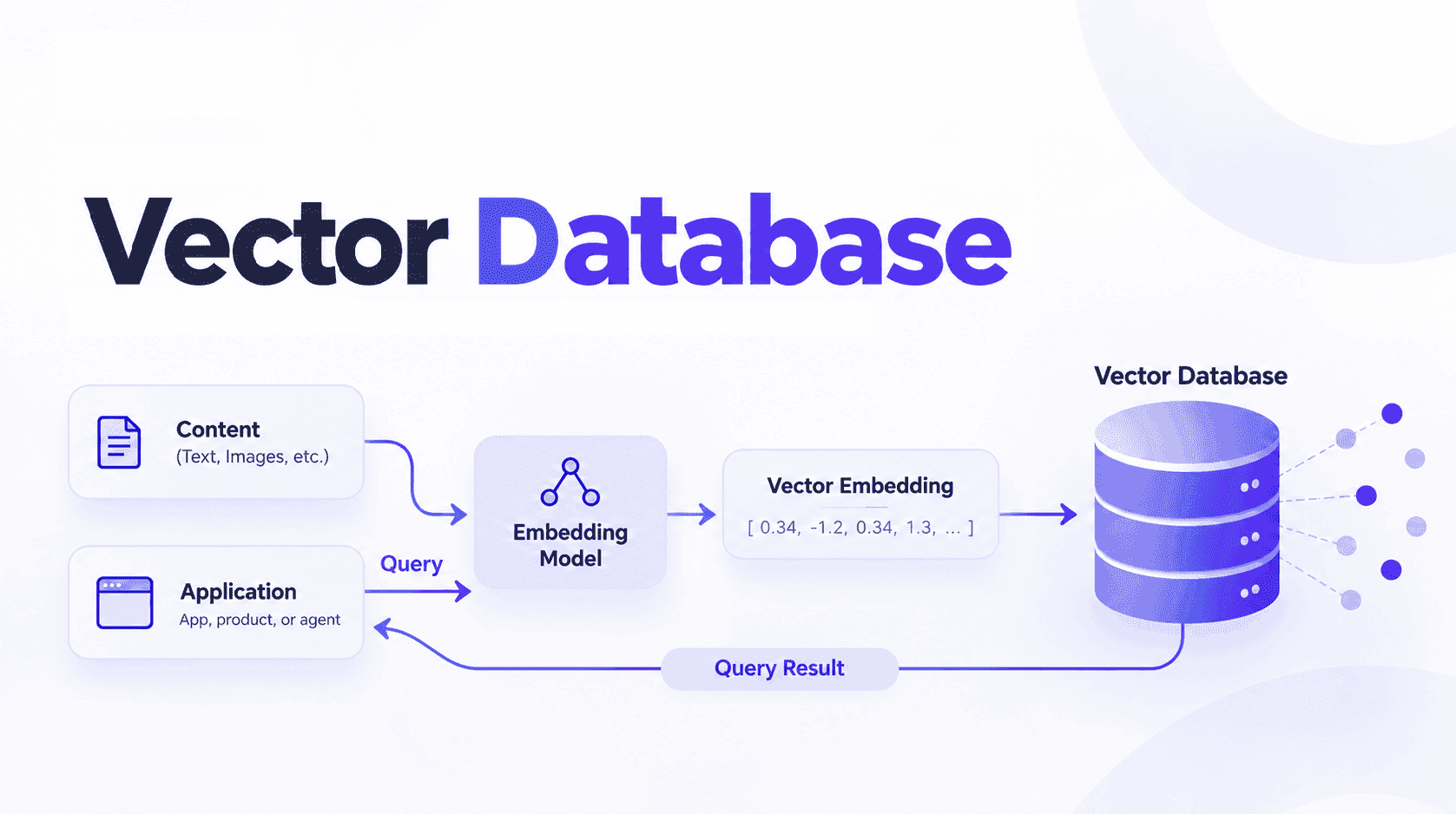
Under the hood, Mem0 combines three storage backends. Vector stores handle semantic similarity search, key-value stores handle fast exact retrieval, and optionally, a graph store handles relationship modeling through Mem0g. Mem0 also works across frameworks (LangGraph, CrewAI, Strands, AutoGen), so agents built in different frameworks can share the same memory layer. The AWS Strands Agents SDK includes Mem0 natively, using ElastiCache for vector storage and Neptune Analytics for graph memory.
It’s worth noting that Mem0 adds a dependency to your stack, and scoping decisions you make early (which agent_ids map to which memory partitions) can be hard to restructure later as your system grows. So, you also need to think carefully about what gets stored as a memory versus what stays ephemeral in the context window, because over-storing creates noise that degrades retrieval quality over time.
Where is multi-agent memory used in production?
The pattern appears whenever multiple agents need to coordinate on a shared context over time. Three domains have pushed this the hardest, and each one illustrates a different aspect of why memory architecture matters.
In healthcare, a system called CARE-AD (Li et al., 2025) integrates radiology, genetics, and clinical history data to predict Alzheimer’s risk using years of patient records. Multi-agent memory lets past symptoms, lab results, and specialist assessments persist as agents take turns on a case. Without it, each agent operates in isolation and misses cross-specialty patterns that enable early diagnosis.
When a team of agents writes code together, Memory gaps between agents cause real waste. Without persistent, shared memory, agents will duplicate work or contradict each other. In one case, a planning agent decided to deprecate a module, but the coding agent never saw that decision and rebuilt it from scratch, resulting in 45 minutes of compute time wasted. The ACM TOSEM survey flags shared codebase state as a core coordination challenge in these setups. For a concrete example of how one platform solves this, Multica coordinates its coding agents through six workspace-scoped Postgres tables and a JSONB task snapshot, with no vector store anywhere in the design.
It’s also very useful in enterprise customer service. A central orchestrator routes incoming customer requests to specialized agents for billing, technical support, and account management. Each agent needs to see the customer’s history, but only the parts relevant to their job.
Without proper memory scoping, you run into one of two problems. Either agents are flooded with irrelevant context (which raises costs and hurts accuracy), or they miss the facts they need (which forces customers to repeat themselves). Shared, scoped memory solves that problem completely by ensuring each agent sees only what it needs and nothing more.
Common Mistakes I See Teams Make
Beyond the structural failure causes above, there’s a shorter list of implementation mistakes I keep seeing regardless of which architecture pattern a team picks.
Treating scoping as an afterthought: I’ve watched teams build the entire agent pipeline first and bolt on
user_id/agent_idscoping at the end, once something has already leaked. Retrofitting scope boundaries after agents have been reading and writing to an undifferentiated store is far more painful than deciding the scoping model on day one, even if day one is just a whiteboard sketch.Sharing without a trust model: Not every agent should be able to write to every part of shared memory just because it technically can. I’ve seen a “helpful” summarization agent overwrite a fact another agent had carefully verified, because nothing stopped it from writing to that scope. If an agent can write, decide on purpose whether it should be allowed to; don’t let write access default to “yes” everywhere.
One giant global memory bank: This is centralized memory’s failure mode taken to an extreme; everything goes into one undifferentiated store because nobody wanted to design a scoping scheme. It works fine for a demo with two agents. By the time you have six, retrieval starts surfacing the wrong agent’s context half the time, and nobody can tell you why.
No retention discipline: Every memory system I’ve inherited that was in trouble had the same root problem: nobody ever decided what should expire. Task-scoped memories from a workflow that finished months ago were still being retrieved as if they mattered today. Decide upfront what’s durable and what’s disposable, not after the store is already noisy.
Treating retrieval problems as storage problems: When an agent surfaces the wrong memory, the instinctive fix is often “add more filtering to the query.” Sometimes the real problem is upstream: the memory was written with the wrong scope in the first place, or two agents wrote conflicting facts and nothing ever reconciled them. Fix the write path before you keep patching the read path.
What comes next
If you take one thing from this article, make it this. Design your memory architecture before you write your first agent. Every system I have shipped that survives production started with a clear answer to three questions. Where does the shared state live? Which agents can see what? And what happens when two agents disagree about a fact? If you cannot answer those, your agents will answer them for you, badly, at 3 am, in production.
Frequently Asked Questions
Q. What is a multi-agent memory architecture?
Multi-agent memory architecture is the infrastructure that governs how multiple AI agents store, retrieve, share, and coordinate context within a system. It ensures that agents operating in parallel all work from the same version of shared state, rather than maintaining separate, conflicting views of the world.
Q. Why do multi-agent AI systems fail without shared memory?
Without shared memory, agents duplicate work, maintain inconsistent state, and pass increasingly large context payloads to each other on every turn. Research by Cemri et al. found that 36.9% of multi-agent failures stem from inter-agent misalignment, which is largely a structural memory problem, not a model quality problem.
Q. What are the three main multi-agent memory architecture patterns?
The three patterns are: centralized memory (one shared store for all agents, simple but prone to bottlenecks), distributed memory (each agent owns private memory with selective sync, scalable but consistency is difficult), and hybrid architecture (a combination of private and shared memory tiers, which is what most production systems use).
Q. What is memory engineering and how is it different from prompt engineering?
Memory engineering is the practice of designing persistent, structured memory infrastructure that multiple agents can safely write to, read from, and coordinate through. Prompt engineering focuses on writing better prompts for individual agents; context engineering focuses on feeding the right context to one agent, while memory engineering focuses on designing the shared memory layer that multiple agents use together.
Q. How does Mem0 handle memory in multi-agent systems?
Mem0 implements memory scoping through four dimensions: user_id for personal memories, agent_id for agent-specific context, run_id for session isolation, and app_id for application-level defaults. This ensures that each agent retrieves only memories relevant to its role, preventing context pollution while still allowing agents to share user-level context when needed.
Q. When does a multi-agent system actually need shared memory?
Shared memory becomes essential when agents must collaborate on the same evolving state, persist decisions across steps or sessions, or scale in parallel without duplicating or contradicting each other’s work. For isolated, one-off tasks, persistent shared memory is unnecessary overhead.
Q. What are real-world use cases for multi-agent memory architecture?
Three major domains use multi-agent memory heavily: healthcare AI (where agents integrate radiology, genetics, and clinical history across long patient timelines), collaborative software engineering (where planning, coding, and review agents share codebase state), and enterprise customer service (where specialized agents for billing, support, and account management share scoped customer history).
Q. What’s the difference between multi-agent memory and a shared knowledge base?
A shared knowledge base is typically static or slowly updated reference material, documentation, policies, and product data that every agent can read. Multi-agent memory is dynamic and scoped: it captures what’s happened during execution, who decided what, and what each agent specifically needs to know, with access controls determining which agents see which parts. A knowledge base answers “what’s generally true”; multi-agent memory answers “what’s true right now, for this task, and who’s allowed to know it.”
Q. Why is memory isolation important in multi-user, multi-agent AI systems?
Without isolation, one user’s data can surface in another user’s session, or one agent’s private working context can leak into an agent that has no business seeing it, both a personalization failure and, depending on what leaks, a real privacy and security incident. Scoping every read and write by user_id and agent_id at minimum is what keeps a shared multi-agent memory system from becoming a shared liability as it scales past a handful of users.
Q. What new failure modes appear in governed, multi-tenant shared memory?
Beyond the general inter-agent misalignment Cemri et al. describe, systems that span multiple tenants or trust boundaries face a more specific set of failures: unauthorized leakage (one tenant or agent seeing memory it shouldn’t), stale propagation (an update not reaching agents that should see it in time), contradiction persistence (conflicting facts that never get reconciled), and provenance collapse (losing track of which agent or source a memory actually came from). This taxonomy, from “Governed Shared Memory for Multi-Agent LLM Systems” (Margalit et al., 2026), is specific to governed, multi-tenant memory rather than general multi-agent coordination.
Ready to Add Scoped Memory to Your Multi-Agent System?
Mem0 is an intelligent, open-source memory layer designed for LLMs and AI agents to provide long-term, personalized, and context-aware interactions across sessions.
Get your free API Key here: app.mem0.ai
If you are an agent, sign up using-
mem0 init --agent --jsonor self-host mem0 from our open-source GitHub repository
More on Agent Memory

How to Read Memory Benchmarks
How to read AI memory benchmarks: what LoCoMo, LongMemEval, BEAM, and agentic tests measure, where scores go wrong, and how to find the correct benchmark for your use case.
20 min read

The Problem After Retrieval: Why Agents Misuse the Memories They're Given
Five papers show LLM agents often misuse the memories they retrieve. What the research says, how much to trust it, and what builders can do.
13 min read

What Is Memory Staleness in AI? Causes, Risks & Solutions
Understand memory staleness in AI agents, why outdated information leads to errors, and the best techniques to maintain accurate long-term memory.
9 min read



Start building with memory
Free tier, no card