

·
30 min read

On this page
TL;DR:
A stateless agent does not implicitly retain state between independent invocations; every request must supply or reconstruct whatever context it needs. A stateful agent reads persisted state before responding and writes back to it afterward, so past interactions can shape future ones. Most production systems are hybrids: stateless compute for scale, with session state, workflow checkpoints, and long-term memory externalized into dedicated stores. A memory layer built for exactly this job, like Mem0, closes most of the gap between "theoretically stateful" and "actually reliable."
Here's the one-line version, before the definitions get wordy: a stateless agent only ever knows what's in the current request, which can include supplied history. A stateful agent additionally has something read in and written back automatically on its behalf. Stateless vs stateful agents isn't a fight to declare a winner in; it's an architectural fork that decides whether persistence is something the caller provides every time, or something the system maintains for you.
Stateless vs Stateful AI Agents: Quick Comparison
This table gives the short answer across the dimensions that usually decide the architecture. The sections after it explain each one.

So the real question was never "is the model stateful?" It's "does anything outside the model read prior context back in before it answers, and write new context back out afterward?"
Dimension | Stateless Agent | Stateful Agent |
|---|---|---|
Persistent state | No implicit persistence | Reads/writes persisted state |
Context across calls | Must be supplied/reconstructed | Can be retrieved |
Horizontal scaling | Easier | Requires externalized state |
Infrastructure | Simpler | More components |
Personalization | Limited unless context is supplied | Persistent |
Workflow continuity | Requires external orchestration | Can resume from state |
Failure recovery | Individual request retry | Requires checkpoints/idempotency |
Concurrency complexity | Lower | State conflicts possible |
Token usage | Depends on replayed context | Depends on retrieval strategy |
Latency | Often lower | State retrieval/write can add latency |
Privacy burden | Lower persistence requirements | Requires storage governance |
Debugging | Easier to reproduce | Historical state may influence output |
Cross-session continuity | No implicit continuity | Supported |
Best fit | Independent one-shot tasks | Multi-step/persistent tasks |
Every major LLM API, GPT, Claude, Llama, whatever you're calling it, is stateless underneath. The model has no built-in memory of your last request. What looks like "chat memory" in a chat product is your own client sending the prior messages back in, every single time. Statefulness, when it exists, was built on top by whoever wrote the surrounding system, not handed to you by the model.
What Is a Stateless AI Agent?
A stateless AI agent does not automatically persist its internal state between independent invocations. Every request must therefore include or reconstruct the context necessary for the current task. That context could include the current user input, previous conversation messages, retrieved documents, user metadata, or external application state.
The key point: stateless does not mean "no context." It means previous state is not implicitly retained by the agent between independent invocations. A stateless application can receive an entire conversation history with every single request and remain stateless at the execution layer, the statelessness describes what the agent retains on its own between calls, not what information is available to it during any one call.
For example: in a current session with Claude, you share that you're vegetarian. Open a fresh session and ask for restaurant suggestions in the Bay Area, and it will recommend a mix of options, not filtered for vegetarian food, because nothing carried that preference into the new session automatically. That's not a flaw. Stateless agents are predictable (output depends only on the context supplied during the current invocation, not on implicitly persisted state from previous interactions) and they scale horizontally without any of the headaches of keeping session data in sync across servers. For a one-shot classification task, a single-turn Q&A, or anything where the request genuinely is the whole job, stateless is simpler and often the right call.
Note on determinism: statelessness does not imply deterministic output. The same input can still produce different generations depending on temperature, sampling configuration, or provider-side randomness. What's consistent in a stateless system is that output depends only on what's supplied in that call, not on anything accumulated from prior calls, not that repeated calls will produce identical text.
What Is a Stateful AI Agent?
A stateful agent reads from some kind of persistent store before it responds and writes back to it afterward. That store might be a session-scoped cache for the length of one conversation, or a durable memory that survives across sessions entirely. Either way, the agent's response depends on more than just the current request; it depends on what happened before.
What actually counts as "state" here is broader than just chat history:
Conversation history or summaries: What was said and decided earlier in this thread.
User preferences and profile facts: The kind of thing that shouldn't need to be restated every session.
Workflow progress: Which steps of a multi-step task are already done.
Learned facts and outcomes: What an agent figured out or got wrong last time is kept around so it doesn't have to rediscover them.
Tool results: The output of an earlier API call or lookup, available without calling it again.
This is the architectural shift that turns a chatbot into something that can track a multi-step task across days, or actually know that you already told it your preferences last week instead of asking again. None of it is a property of the model. It's infrastructure someone built around the model, on purpose.
Stateless Does Not Mean "No Context"
A typical flow looks like this: conversation history flows into the application, which combines it with the current request into one payload, then invokes the LLM.
The LLM execution itself is stateless, which means it has no memory of being called a moment ago. But the application reconstructs conversational context before every single invocation, and from the user's perspective, the result feels continuous even though nothing about the model's own call is.
There are multiple layers where "statefulness" can exist: the model, the agent runtime, the application, the workflow, the memory system, the database. Treating an entire system as simply either stateful or stateless collapses all of these layers into one label, when in practice each layer can make its own independent choice.
Stateless Model vs Stateless Agent vs Stateless Application
"Stateless" means something different at each layer of the stack, and the three get confused constantly. Here is what each one actually claims.
Stateless model: the LLM itself does not remember previous API calls. Every inference starts from the supplied context alone.
Stateless agent worker: a worker process that handles tasks independently and stores no local persistent state of its own. It may still read external state; maintaining no state locally is a property of the worker, not a claim about the whole system.
Stateful application: the broader application can persist user data, conversation state, workflow state, memories, and checkpoints, regardless of how stateless the individual compute layer underneath it is.
The practical upshot: a system can use entirely stateless LLM calls while still providing a highly stateful user experience. The two claims, "the model call is stateless" and "the product feels like it remembers you," are not in tension; one is implemented by the other.
State vs Memory vs Context vs Checkpoint vs Knowledge
These five words get used as if they mean the same thing. They do not. Each one has a different lifetime and a different job.
Concept | Meaning | Typical Lifetime | Example |
|---|---|---|---|
Context | Information currently available to the model | One inference/request | Prompt + retrieved documents |
Session state | Information retained during an active interaction | Minutes–hours | Current conversation progress |
Workflow state | Current status of a process | Task duration | Waiting for approval |
Checkpoint | Snapshot used to resume execution | Workflow duration | Steps 1–3 completed |
Memory | Information retained because it may be useful later | Days/months+ | User prefers Python |
Knowledge | External reference information | Persistent | Product documentation |
Memory is one form of persistent information, but state is broader. State can include workflow position, tool outputs, pending approvals, retry counters, the current plan, environment variables, session information, and intermediate results, most of which has nothing to do with "remembering" something about a user and everything to do with tracking where a process currently stands.
Where Does AI Agent State Live?
A production agent usually spreads state across several places, each with a different lifetime and a different access pattern. These are the layers you will encounter.
Context Window
Temporary information currently visible to the LLM: the user message, system instructions, tool results, and anything retrieved from memory for this specific call.
Client/Application State
The application can maintain conversation history or metadata and resend it on every request, while the model invocation itself stays stateless.
Session Store
Used for short-lived state: an active conversation, the current task, temporary preferences, authentication or session information. Typical technologies: Redis, Memcached, or an application database.
Structured Database
Used for durable structured state: user records, workflow status, transactions, agent task state. Typical technologies: PostgreSQL, DynamoDB, or other transactional databases.
Checkpoint Store
Stores execution snapshots, useful for failure recovery, durable workflows, long-running agent tasks, and human-approval steps. Many agent frameworks model the workflow as a state machine or a state graph, then checkpoint each node as it completes. This is what makes durable execution possible: the process can stop and continue later without a loss of progress.
Vector / Memory Store
Used for semantic retrieval and persistent memory: user preferences, past interactions, important events, agent experiences.
Event Log
Stores a historical record of state-changing events, useful for debugging, audit, replay, and state reconstruction.
How Stateless AI Agents Work
Turning a stateless call into a stateful one doesn't require rebuilding the agent's reasoning; it requires a place to write what's worth keeping and a way to read it back later. That's the whole job of a memory layer. See "How to Make an Agent Stateful With Mem0" below for the worked example.
How Stateful AI Agents Work
A stateful system follows the same loop on every request:
Load: Read the state that applies to this user, session, or workflow.
Validate: Check that the state is current, complete, and that this caller can use it. Do not trust state only because it exists.
Hydrate context: Put the loaded state into the prompt as usable context. This step is also called context hydration.
Reason: Run the model over that context and the new input.
Act: Call a tool, write a file, or answer the user.
Update state: Record what changed: a new fact, a completed step, a tool result.
Persist: Write the update to durable storage.
Checkpoint: Save the execution position if the task has more steps.
Resume or expire: Continue from the checkpoint later, or let the state expire when it is no longer useful.
The Memory Lifecycle
The state lifecycle above and the memory lifecycle are not the same loop. State moves a task forward. Memory decides what is worth keeping after the task ends.
Observe: The agent sees a new interaction.
Extract: It pulls candidate facts out of that interaction. Most of a conversation produces nothing.
Decide whether to store: Not every extracted fact is durable. A one-time instruction is not a preference.
Persist: Write the fact to the memory store with its scope and metadata.
Retrieve: Find the relevant facts later, when a new request makes them useful.
Use: Put the retrieved facts into the prompt.
Update or consolidate: Merge duplicates, revise a fact when new evidence disagrees, and supersede a fact that is clearly replaced.
Forget: Drop or down-rank what is stale, so the store stays useful as it grows.
A state lifecycle ends when the task ends. A memory lifecycle continues across tasks and sessions. This is the loop a memory layer such as Mem0 runs for you.
How Stateful Agents Organize Memory
Once you decide an agent must remember something, the next question is where that memory lives, and for how long. "Memory" is not one bucket.
Short-term memory is whatever fits in the current context window: the recent turns of this conversation, still fresh and cheap to reference directly. It is the easiest state to reason about, and also the state that quietly runs out. Even a large context window is not free space, and when you put everything in it, you only delay the same truncation problem a stateless agent hits.
Long-term memory is state that must survive past this session: a user's standing preferences, a fact learned three weeks ago, a procedure every future run must follow. A plain in-process variable or a session cache was never built to hold this. It needs somewhere durable, queryable, and correctly scoped, so the right agent or user gets the right memory back. This is the layer Mem0 is built for: add() writes a fact once, search() pulls back only what is relevant to the current query instead of everything ever stored, and update() revises a memory cleanly as new information arrives, rather than appending a contradiction next to the old fact.
If the workflow is genuinely multi-step, there is one more layer above raw memory: explicit tracking of where the task currently is. States such as "waiting on approval", "collecting input", or "executing the last step" stop the agent from re-inferring its own position every turn. Orchestration frameworks handle that layer. Mem0 sits one layer below it, as the durable place those workflows read facts from and write outcomes back to, so a restart, a handoff, or a resumed session does not start from an empty memory.
Types of State in AI Agents
"State" covers more than conversation history. These are the six kinds you will meet in a production agent.
Session state: information tied to the current active interaction, typically short-lived.
Workflow state: where a multi-step process currently stands, distinct from any fact being remembered.
User state: durable facts and preferences tied to a specific person across sessions.
Tool state: results or side effects from a tool call, available without re-invoking the tool.
Environment state: facts about the surrounding system or context the agent operates in, rather than about a specific user or task.
Persistent memory: information retained specifically because it's likely to be useful later, the layer Mem0 is built for.
RAG vs State vs Agent Memory
These three are the most confused trio in agent architecture, and mixing them up leads to real design errors. Each answers a different question.
RAG retrieves external knowledge, company documentation, for example, that exists independently of any specific user's history.
Memory retrieves information learned from prior interactions or experiences, like a user's preferred programming language.
State tracks the current condition of a user, session, workflow, or process, like being on step 4 of a deployment.
Context is the information currently placed into the model's input, the layer all three of the above eventually feed into.
All four can and typically do coexist in the same agent. None of them is a substitute for the others; confusing memory with RAG, or state with memory, is one of the more common architectural mistakes in agent systems.
Checkpoints vs Agent Memory
Both of these persist information, so teams often merge them into one store. That is a mistake, because they serve opposite purposes.
Checkpoint captures where an execution currently is: tool A completed, tool B completed, waiting for human approval.
Memory captures information worth recalling in the future: the user prefers TypeScript, the user's company uses AWS, a previous troubleshooting attempt failed.
The simple distinction: checkpoint exists to resume execution. Memory exists to recall useful information. A system that conflates the two ends up either bloating its memory store with transient execution details, or losing durable facts when a workflow run completes and its checkpoint is discarded.
Hybrid Stateless & Stateful Agent Architecture
A common production architecture keeps compute stateless and externalizes everything that needs to persist: a user's request reaches a stateless API or agent worker, which hands off to an orchestrator; the orchestrator reads from and writes to a session store, a workflow or checkpoint store, and long-term memory as needed; the result feeds into the LLM and any tools it calls.
The compute layer stays stateless and horizontally scalable, since any worker can pick up any request. Persistent information lives in specialized stores built for exactly that job. This combination gives the system scalability, resumability, personalization, cross-session continuity, and cleaner state isolation between users, all without making the compute layer itself harder to scale.
Four Common Agent Architecture Patterns
Real systems are rarely at either extreme. These four patterns cover almost everything built today, in rough order of increasing persistence.
Pattern 1 — Pure stateless request/response.
User input flows straight to the LLM and back. Best for classification, extraction, transformation, and one-shot questions. No persistence of any kind.
Pattern 2 — Stateless compute + conversation replay.
Conversation history accompanies every request to an otherwise stateless model. Works for short conversations and simple assistants, but context size and token cost grow continuously as the conversation lengthens.
Pattern 3 — External session/workflow state.
An agent worker reads from and writes to a session database or checkpoint store before calling the LLM. Useful for multi-step workflows, agent orchestration, and resumable tasks.
Pattern 4 — Stateful memory + fresh source-of-truth reads.
The agent retrieves long-term memory for preferences, history, and prior experience, but reads fresh data directly from the authoritative system for anything that changes: prices, inventory, permissions, account balances, current availability. This distinction, between what's safe to remember and what must always be fetched fresh, is one of the most important design decisions in a production agent.
What Should an AI Agent Remember?
Good candidates for memory: stable user preferences, important previous decisions, long-term goals, frequently useful facts, previous experiences, and relevant interaction history, the kind of information that stays true for a meaningful stretch of time and is expensive to re-derive every session.
These divide into two familiar types. Semantic memory holds durable facts, such as a user's role or preferred language. Episodic memory holds specific past experiences, such as an approach that failed last week. Both belong in long-term memory. Neither belongs in a session store, because both outlive the session.
What Should NOT Be Stored as Agent Memory?
Poor candidates for long-term memory: live account balances, current permissions, inventory levels, rapidly changing prices, temporary authentication credentials, secrets, redundant raw transcripts, unverified LLM assumptions, and any data that's already easily available from an authoritative system.
The key rule: remember stable context, fetch volatile facts from the source of truth. A memory layer that stores a price or a balance is guaranteed to go stale the moment that value changes elsewhere, turning a performance optimization into a correctness bug.
Stateful AI Agent Failure Modes
None of these are exotic. They're the predictable ways "we added a memory layer" goes wrong in production, and every one of them is avoidable once you know to look for it.
Failure | Cause | Mitigation |
|---|---|---|
Stale reads | The agent loads what it thinks is current state, but another session, agent, or parallel request has already changed the underlying fact, and the agent acts on it with full confidence anyway | Read at decision time, not once at the start of a long-running task; prefer a memory layer's own search() at the moment of the decision over a value cached earlier in the run |
Partial writes | An interaction updates more than one thing, a preference here, a workflow flag there, and the process dies between writes, leaving state internally inconsistent | Keep the number of places a single interaction writes to as small as possible, and prefer a memory API that returns the written record back (Mem0's add()/update() responses confirm what actually landed) rather than a fire-and-forget write you never verify |
Race conditions | Two agents, or two instances of the same agent, read the same memory, both reason from it, both write back, and one write silently clobbers the other, most common in multi-agent setups sharing a user_id or agent_id scope | Scope writes as narrowly as the task allows, per-agent or per-run rather than one shared bucket. For a shared record, use optimistic locking: attach a version to each read, and reject a write whose version is stale |
Memory drift | Not every stored fact is equally trustworthy, and a memory that only ever gets reinforced, never revised, quietly grows more wrong over time as small contradictions get ignored | A confidence-tracking pattern: track how much evidence backs a stored fact, and let a memory get revised, not just appended to, when new evidence disagrees |
Lost progress after a crash | An agent fails partway through a multi-step task and, with nothing checkpointed along the way, has to restart from zero instead of resuming from step three of five | Write progress as each step is actually completed, not just once at the end on success, and design each step to be safe to re-run in case a retry double-fires it |
Cross-user / tenant leakage | A bad or missing state namespace lets one user's or tenant's state become visible to another, a distinct and serious production risk specific to persistent agent memory | Enforce tenant and user isolation at the scoping level itself, not just in application logic, so a missing filter fails closed rather than silently returning someone else's data |
Duplicate action | A request times out, the caller retries, and the agent performs the same side effect twice: two refunds, two emails, two tickets | Make each action idempotent. Give every action an id, and check whether that id already ran before you repeat it |
Incorrect memory | The agent stores something it inferred rather than something the user stated, and later treats the guess as fact | Record where each memory came from, and keep model guesses separate from user statements until something confirms them |
Of these, cross-user leakage needs the most attention. It is specific to persistent memory: a stateless agent cannot leak what it never kept.
Scaling Stateful vs Stateless Agents
Stateless compute scales by adding more identical workers; any worker can handle any request, since none of them hold anything the others need. Stateful systems scale differently: the compute layer can still scale horizontally, but whatever it reads from and writes to, the session store, the database, the memory layer, has to scale and stay consistent underneath it. State synchronization becomes a design problem of its own once more than one worker can write the same record. Concurrency becomes a real design concern the moment more than one worker can touch the same piece of state, which is exactly why the failure modes above (stale reads, race conditions) exist specifically in stateful systems and not stateless ones.
Latency and Token Costs
Token cost depends on how historical context is reconstructed, not on whether a system is labeled stateless or stateful. A stateless application that replays full conversation history on every request can become extremely token-expensive as a conversation grows. A stateful, memory-enabled system can instead retrieve only the small amount of prior context actually relevant to the current turn, often at a fraction of the token cost of full replay.
So: stateless is not automatically cheaper, and stateful is not automatically more expensive. Actual cost depends on context replay strategy, memory retrieval design, summarization, database operations, checkpointing overhead, vector search, and raw LLM input size. The same logic applies to latency: stateless calls often have lower latency simply because there's no state retrieval or write step, but a well-designed memory retrieval adds only the latency of a fast lookup, not the latency of resending an ever-growing transcript.
Privacy and Security Considerations
Stateful systems persist data, which creates responsibilities a purely stateless system doesn't carry: access control, tenant isolation, user identity verification, data retention policy, data deletion on request, PII handling, encryption, audit logging, memory provenance, protection against memory poisoning, TTL and expiration policy, and authorization checked before memory retrieval, not just before memory storage.
The important point: state should not be retrieved merely because it exists. A system also has to verify that the current agent or user is actually authorized to access that specific piece of state, retrieval and authorization are two separate checks, and skipping the second one because the first one succeeded is how cross-tenant data leaks happen.
Debugging and Observability
Stateful systems can be harder to reproduce, because an agent's output may depend on historical state that isn't visible in the current request alone. Useful fields to log: user ID or namespace, session ID, workflow ID, checkpoint ID, state version, retrieved memory IDs, retrieval scores, tool calls, state transitions, memory writes, memory updates, and source or provenance for each stored fact. Without this, reproducing a bug means reconstructing not just what was asked, but everything the system believed to be true at the time.
Stateless vs Stateful Agent Examples
The split between state, memory, and fresh data is easier to see in a concrete agent than in the abstract. Here are four, each with the same three-way split.
Coding agent
State: current task, modified files, test status.
Memory: preferred coding style, project conventions, previous architectural decisions.
Fresh data: current repository contents, latest CI results.
Customer support agent
State: current support case, escalation stage.
Memory: customer preferences, previous support history.
Fresh data: current subscription status, billing status, order status.
Research agent
State: research progress, sources already analyzed.
Memory: a user's recurring research preferences.
Fresh data: current papers, news, or web results.
Shopping / travel agent
State: current itinerary or cart.
Memory: preferred destinations, seat preferences, hotel preferences.
Fresh data: price, availability, flight inventory.
Across all four, the same pattern holds: state tracks where this specific task currently stands, memory carries what's durably true about the user, and fresh data is anything that would be actively wrong to cache.
Should You Use a Stateless or Stateful Agent?
The answer depends on your workload, not on which architecture sounds more advanced. Use these conditions to decide.
Use stateless when: requests are independent, tasks are one-shot, low latency is critical, no cross-session personalization is needed, processing can easily be retried, and minimal infrastructure is preferred.
Use stateful when: tasks span multiple steps, users return across sessions, personalization matters, workflows must resume after failures, previous experiences should affect future decisions, or agents need persistent memory.
Use hybrid when: stateless compute scalability matters, but workflows or users still require persistence, and only selected information should actually survive between requests, which describes most real production systems.
A quick decision path: Does the next request depend on something that happened earlier? If no, stateless may be sufficient. If yes, can the required context simply be supplied with each request? If yes, stateless compute plus externally supplied context may work. If no, does the system need workflow continuity, personalization, or long-term recall? If yes, use persistent state or memory.
From there: does all previous information need to persist indefinitely? If no, a hybrid architecture with selective memory is the right fit, which is where most systems actually land.
How to Make an Agent Stateful With Mem0
Turning a stateless call into a stateful one doesn't require rebuilding the agent's reasoning; it requires a place to write what's worth keeping and a way to read it back later. That's the whole job of a memory layer.
If this got you interested? Get yourself a Mem0 API Key and let's dive deeper.
The stateless function only ever sees the string it's handed. The stateful one calls search() first, finds the preference session 1 stored, and answers a question it was never directly asked in this call.
This example hardcodes USER_ID; in production, deciding which ID an incoming session actually belongs to is its own problem; see cross-session identity resolution for how that mapping breaks down across devices and anonymous sessions.
That's the entire mechanical difference between the two categories. You can run this directly with a Mem0 API Key, on your system.
Why this distinction actually matters
An agent that only reasons can only ever start. It can begin understanding a codebase, begin learning what you want, begin a migration, and then the request ends, and all of that begins again from zero next time. Memory is what lets an agent continue instead of just starting, and continuation is what compounds.
The benefit isn’t just theoretical. Reflexion, a system that lets an agent write down what went wrong after a failed attempt and read that note back on the next one, took a coding benchmark from an 80% baseline to 91%, with the model's weights never changing (Shinn et al., NeurIPS 2023). Nothing about the model got smarter. It just stopped repeating its own mistakes because it remembered the outcome, not just the fact. Voyager, an agent that kept a growable library of skills it had already learned, collected 3.3 times more unique items and hit milestones up to 15.3 times faster than agents without that memory (Wang et al., 2023).
Now, let’s understand how the two vary in properties:
Properties | Stateless | Stateful |
|---|---|---|
Memory across calls | None | Reads and writes persistent state |
Predictability | Same input, same output, always | Depends on accumulated context |
Scaling | Trivial, no session data to sync | Needs a memory layer that scales with you |
Personalization | Has to be restated every time | Compounds over time |
Multi-session tasks | Not possible | Highly useful for multi-tasks |
Best fit | Single-turn, transactional, high-throughput tasks | Anything spanning sessions, or anything that should get better with use |
Infrastructure Mapping
Each persistence layer above maps to a familiar technology. This table is a starting point, not a prescription.
Requirement | Typical Technology |
|---|---|
Session state | Redis |
Structured persistent state | PostgreSQL / DynamoDB |
Workflow checkpoints | Agent orchestration/checkpoint system (e.g., LangGraph) |
Semantic retrieval | Vector database |
Persistent agent memory | Memory layer such as Mem0 |
External knowledge | RAG/document store |
Event history | Event log |
Minimal to Production Agent Progression
Most teams arrive at a production architecture in stages. Each level solves the problem the previous one creates.
Level 1 — Context replay: Send previous messages with every request. Simple to implement, but context and token usage grow continuously as the conversation lengthens.
Level 2 — External session state: Store conversation and workflow data externally, retrieving it before each task rather than keeping it in the prompt the whole time.
Level 3 — Persistent memory & durable workflow state: Keep execution state in a state or checkpoint system, long-term useful information in memory, and volatile information in authoritative systems. This is the recommended production mental model, and the one most of this guide has been building toward.
Wrapping Up
Stateful vs stateless agents isn't a hierarchy where one is simply better. They're a trade-off between predictability and continuity, and most systems need both somewhere.
What's not optional is knowing which one you're building at any given moment, because an agent that's supposed to remember you and architecturally can't is a worse experience than one that was honestly stateless from the start. Mem0 is the piece that turns "start" into "continue," a place to write what's worth keeping and read it back later, without having to rebuild an agent's reasoning to get there.
Further Reading
How Mem0 Gives Stateless Edge Agents Long-Term Memory
Long-Term Memory for AI Agents: The What, Why and How
Memory in Agents: What, Why and How
—-
Mem0 is an intelligent, open-source memory layer designed for LLMs and AI agents to provide long-term, personalized, and context-aware interactions across sessions.
Get your free API Key here: app.mem0.ai or
Self-host mem0 from our open-source GitHub repository.
—-
Frequently Asked Questions
These are the questions that come up most when teams first separate state from memory.
Q. What is a stateless agent?
A stateless agent does not automatically persist state between independent invocations. Each call must supply or reconstruct whatever context it needs, which can include full conversation history, it just means nothing is carried forward implicitly by the agent itself.
Q. What is the difference between stateful and stateless AI agents?
A stateless agent only knows what's supplied in the current request. A stateful agent reads from a persistent store before responding and writes back to it afterward, so its answers can depend on everything that happened in prior interactions, not just the current one.
Q. When should I use a stateless agent instead of a stateful one?
When the request genuinely is the whole job: a one-shot classification, a single-turn lookup, anything where yesterday's interaction has no bearing on today's answer, and where horizontal scalability matters more than continuity.
Q. Why do stateful agents need a memory layer like Mem0?
Because state has to be read and written somewhere, and a memory layer handles that without forcing you to rebuild an agent's reasoning around it. Mem0 gives a stateless call a place to store what's worth keeping and a way to retrieve it in a later session, the mechanism behind turning "start" into "continue."
Q. Can an agent be both stateless and stateful?
Yes, and most real systems end up that way. Stateless where a task is genuinely self-contained and scale matters; stateful wherever a task spans sessions or should improve with use. The two aren't opposites to pick once; they're a trade-off made per task.
Q. Are LLMs stateless?
Yes, individual LLM inference calls are generally stateless unless historical information is included in the current request or retrieved by the surrounding application. The model itself has no built-in memory across separate calls.
Q. Does a context window make an AI agent stateful?
Not by itself. The context window only contains information supplied during the current inference call. Persistent state requires information to survive across separate interactions, which the context window alone doesn't provide.
Q. What is the difference between state and memory in AI agents?
State represents the current condition of a session or workflow, like being on step 4 of a deployment. Memory stores information that may be useful to recall much later, like a user's preferred programming language. State is broader than memory and includes things, like retry counters or pending approvals, that have nothing to do with remembering a fact.
Q. Is RAG the same as agent memory?
No. RAG primarily retrieves information from an external knowledge source that exists independently of any user's history. Agent memory typically stores information learned from previous interactions or experiences with a specific user.
Q. Is a vector database enough to make an agent stateful?
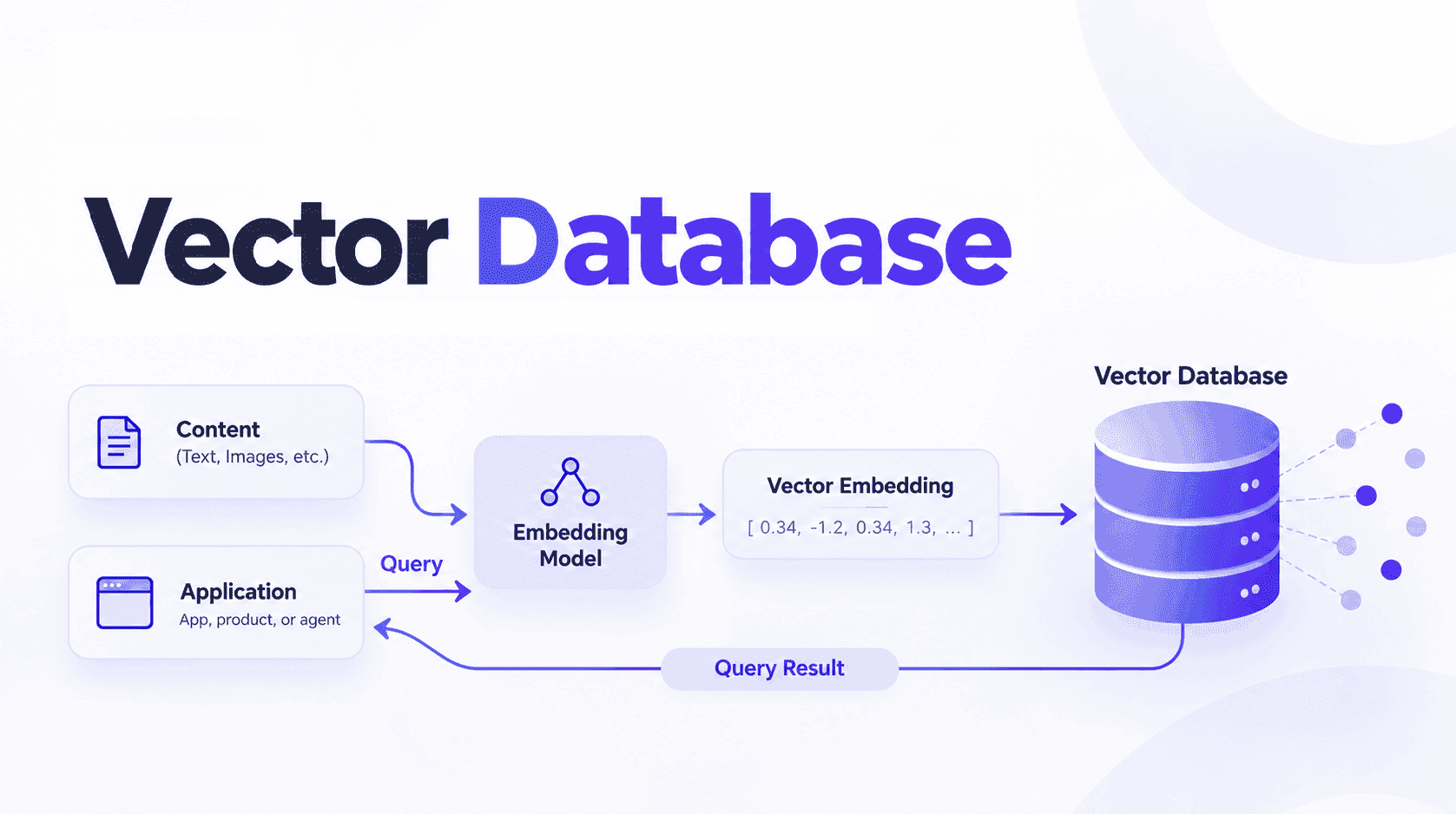
Not necessarily. A vector database provides a storage and retrieval mechanism, but the application still needs policies governing what gets stored, retrieved, updated, forgotten, and associated with each user or workflow, a database alone doesn't define any of that.
Q. Can a stateless agent have conversation history?
Yes. The application can resend previous conversation history with each request while the underlying agent invocation itself remains stateless.
Q. Why are stateful AI agents harder to scale?
Because state must remain consistent across workers and sessions. Production architectures usually externalize that state into a dedicated store so the compute layer itself can still scale horizontally without the workers needing to coordinate directly with each other.
Q. When should an AI agent use long-term memory?
When information from previous interactions is likely to be useful later: stable preferences, goals, important decisions, or past experiences that don't change from one session to the next.
Q. When should an AI agent not use memory?
For volatile information like current inventory, live prices, permissions, balances, or rapidly changing business data. These should be fetched from authoritative systems at the time they're needed, not cached in memory where they're guaranteed to eventually go stale.
More on Agent Memory

How to Read Memory Benchmarks
How to read AI memory benchmarks: what LoCoMo, LongMemEval, BEAM, and agentic tests measure, where scores go wrong, and how to find the correct benchmark for your use case.
20 min read

The Problem After Retrieval: Why Agents Misuse the Memories They're Given
Five papers show LLM agents often misuse the memories they retrieve. What the research says, how much to trust it, and what builders can do.
13 min read

What Is Memory Staleness in AI? Causes, Risks & Solutions
Understand memory staleness in AI agents, why outdated information leads to errors, and the best techniques to maintain accurate long-term memory.
9 min read



Aashi Dutt
She is a senior technical content writer at Mem0. She covers agent memory architecture and the engineering decisions behind building agents that actually remember. She experiments with new features and turns research into posts developers can put straight to use.
Start building with memory
Free tier, no card