

Updated on Sep 9, 2026
·
2 min read
On this page
Personal AI companions are here, and they're not going away.
To grasp the scale of this emerging sector, consider this: Character AI, a leading company, reports that its users spend over two hours daily talking to chatbots. The company handles over 20,000 queries per second - 20% of Google's volume!
While these numbers are impressive, companion apps face a challenge.
The Problem
These chatbots can't remember.
What does this mean?
Due to the way LLMs are built, they can't retain memories about the user. If someone shares details about their life in one chat, the app won't remember these in a new one. Also, companion apps often make up details about themselves to talk with users. These made-up details aren't kept across chats either.
A simple fix would be to add full records of past chats to the context window. But as the chatbot-user relationship grows over days, weeks, and months, doing this at scale is costly, unworkable, and hurts results.
We need a better answer.
Enter Mem0
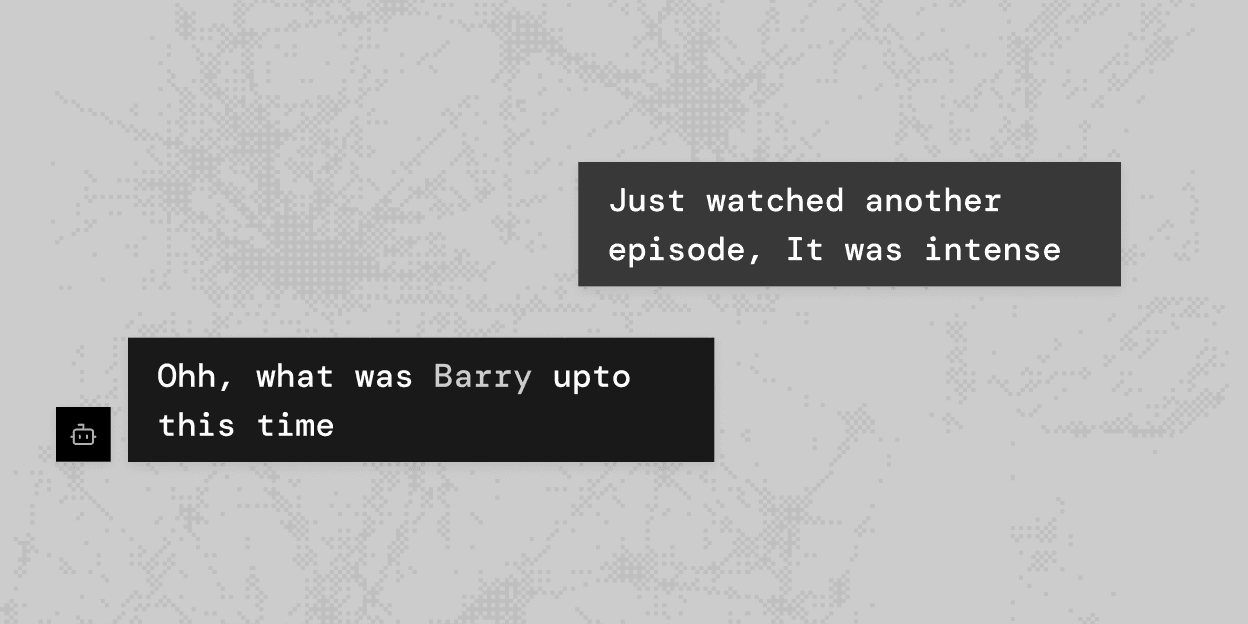
Mem0 helps AI Companion Apps detect and store memories for users, creating truly personalized experiences. These memories can be maintained across different chats, allowing continuity in interactions. This creates a stronger relationship between companion and user, leading to higher retention and engagement.
Mem0 also helps maintain memories for the companion itself. Developers can now create companions with consistent life stories and personalities, just as people expect from their friends and family in real life.
Mem0 is self-updating, continuously adjusting the user's memories to reflect their changing preferences and life events. As users evolve, so does Mem0 with them. Mem0 also removes the need to add past chat records in the context window, saving developers money, cutting delay, and making responses more relevant.
Learn More
Companions are a strong use case for LLMs, with the market rapidly growing due to advancements in AI and increasing demand for personalized virtual experiences. Mem0 enhances companions, making interactions more engaging and enjoyable.
You can learn how to add Mem0 to your companion apps with a Python notebook
To learn more about Mem0, refer to our documentation or visit our website. If you’re looking for additional help, feel free to reach out to us directly at [email protected].
More on Agent Memory

How to Read Memory Benchmarks
How to read AI memory benchmarks: what LoCoMo, LongMemEval, BEAM, and agentic tests measure, where scores go wrong, and how to find the correct benchmark for your use case.
Oct 8, 2026
20 min read

The Problem After Retrieval: Why Agents Misuse the Memories They're Given
Five papers show LLM agents often misuse the memories they retrieve. What the research says, how much to trust it, and what builders can do.
Oct 1, 2026
13 min read

What Is Memory Staleness in AI? Causes, Risks & Solutions
Understand memory staleness in AI agents, why outdated information leads to errors, and the best techniques to maintain accurate long-term memory.
Sep 23, 2026
9 min read



Taranjeet Singh
Taranjeet is the co-founder of mem0. His work centers on a question most LLM teams hit but few solve well: how do you give an agent durable, structured memory without ballooning context windows or sacrificing latency? His writing focuses on the practical architecture of memory-augmented agents, the tradeoffs between long context and retrieval, fact extraction at scale, schema design for episodic memory, and why benchmarks like LoCoMo and MemGPT often show such different results in lab vs production environments. He has spoken on these themes at the AI Engineer Summit, LangChain's Interrupt, and other developer conferences.
Start building with memory
Free tier, no card