

·
9 min read

On this page
Kimi K2.7 Code can refactor a module, write the tests, and walk a debugging session end to end. Then the session closes and it forgets your project conventions, the bug it just fixed, and the architectural decision you made together. Tomorrow it starts from a blank slate.
That is not a model weakness. Every stateless LLM behaves this way. The fix is a memory layer that lives outside the model and persists what matters across calls. This post shows how to wire Kimi K2.7 Code to Mem0 in four lines, with code you can run today.
Quick Takeaways
Kimi K2.7 Code is tuned for code generation, refactoring, and debugging, but it holds no state between sessions.
Production agents need cross-session recall: user intent, codebase quirks, prior fixes, and project conventions.
Mem0 stores those memories outside the model and returns the relevant ones on each call.
Integration takes four lines:
add()to store,search()to retrieve, then inject the results into the prompt.The result is an agent that accumulates experience instead of rediscovering the same facts every request.
New to this topic? Three terms to know
Stateless model: A model that treats each prompt as its entire world. Nothing carries over from the last call. Kimi K2.7 Code is stateless, like every LLM.
Memory layer: A separate store that holds facts, decisions, and history, then returns the relevant pieces when the agent needs them. This is what Mem0 provides.
Scoped memory: Memories tagged to a user, a repository, or a task, so a query about the billing service does not return notes about the auth service.
What is Kimi K2.7 Code ?
Kimi K2.7 Code is part of the recent wave of code-optimized models. It is tuned for software engineering work where structured reasoning and syntax correctness matter:
Generating functions and modules from natural language specs
Refactoring and explaining existing code
Writing unit tests and harnesses
Static review for bugs and performance issues
Multi-step debugging sessions
In an agent stack it usually sits behind an orchestration layer. It receives a high-level goal, drives tools like file systems and CI pipelines, and refines its output across iterations.
None of that changes the core constraint. Each call treats the prompt as the whole context. When the agent needs to remember anything past the current window, the stateless design becomes the bottleneck.
The memory problem
Here is the before state. A code agent built on Kimi K2.7 Code, with no memory layer, hits the same four walls:
It forgets your project: Conventions, internal APIs, and acceptance criteria vanish unless you paste them into every new prompt.
It rediscovers known facts: It re-scans the same files, re-analyzes the same bug, and re-asks the same questions, because last week's answer was never stored.
It fights the context window: Kimi K2.7 Code ships with a 256K context window, which is large, but a full monorepo plus weeks of debugging history still does not fit. The agent summarizes aggressively and drops details that turn out to matter.
Its tools do not share anything: Code indexers, test runners, and issue trackers each produce rich output. Without a shared store, that output dies the moment the call ends.
Kimi K2.7 Code cannot solve any of this on its own. The missing piece is a persistent layer that ties information to users, projects, and tasks.
How Mem0 fits
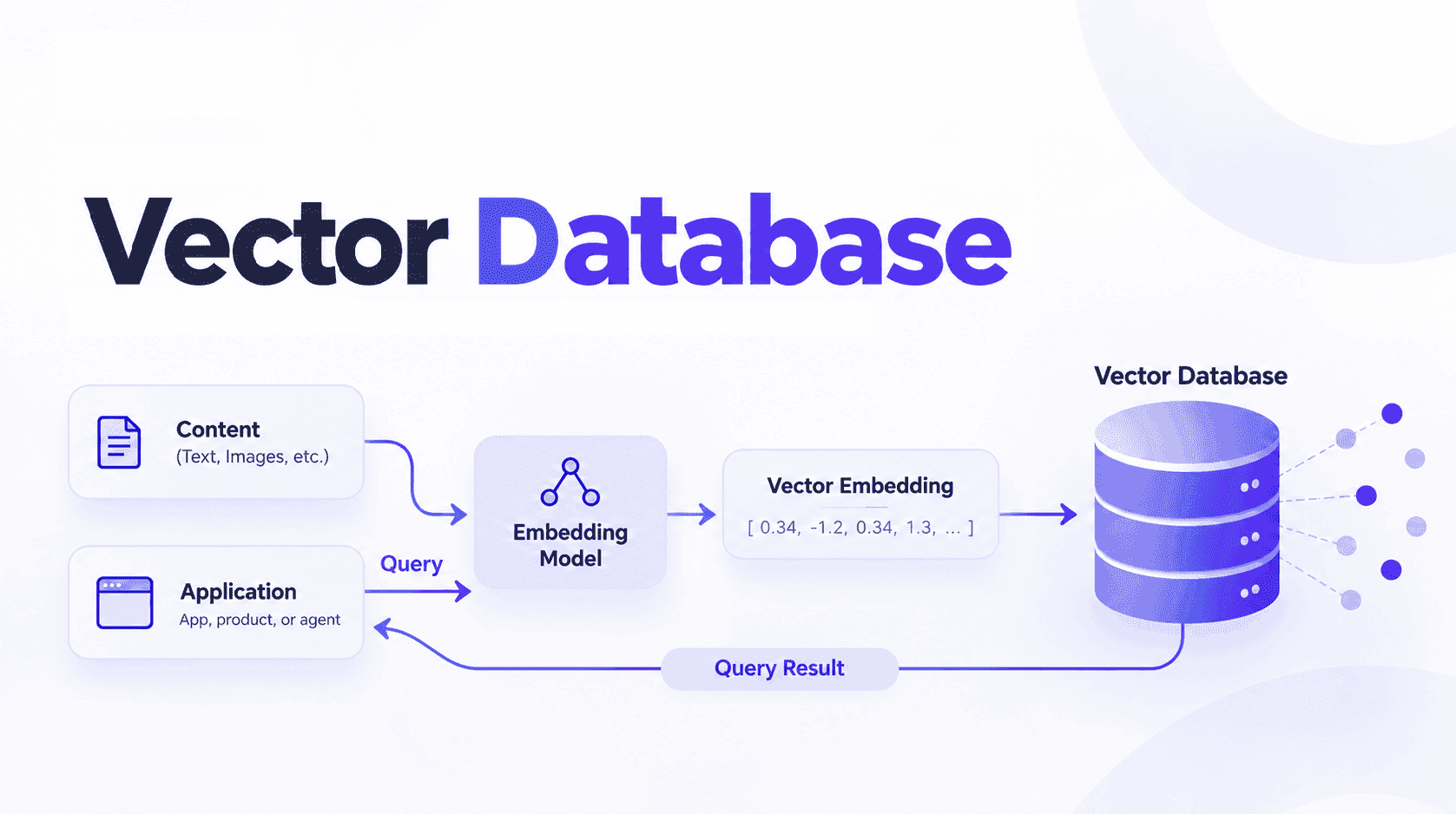
Mem0 is the memory spine. It sits between your orchestration layer and the model, capturing context and serving it back across calls and sessions.
Scoped memory per user, repo, or task, so retrieval stays relevant.
Semantic retrieval by similarity and metadata, not raw string matching.
Automatic and manual capture, so you can log explicit memories or let Mem0 extract key facts.
Structured payloads that carry file paths, function names, and error signatures, which is exactly what code agents need.
Kimi K2.7 Code stays the reasoning engine. Mem0 supplies the long-term recall. The orchestration layer reads from Mem0, builds the prompt, calls the model, and writes the outcome back.
The four lines that change everything
You do not need to restructure your stack. Here is the entire pattern.
One note that trips people up: add() takes user_id= as a direct argument, while search() and get_all() scope through filters=. Mix them up and the call silently returns the wrong set of memories. Keep add direct and search filtered.
You ca set the Mem0 API key as an env variable as follows.
But, first, go to app.mem0.ai, sign up for free, and copy your API key from the dashboard.
That is the whole integration. Everything below is putting those four lines to work.
A working agent loop
This routine retrieves relevant memories, calls Kimi K2.7 Code with that context, and stores the outcome for next time. Swap the model wrapper for your provider's endpoint.
Signup to Moonshot AI platform to get the Kimi API Key and run the following:
Run this twice. The first call has no memory and Kimi K2.7 Code starts cold. The second call, on a related issue, retrieves the first fix and feeds it in, so the model builds on prior work instead of starting over. That is the after state.
Try it on your own agent!
You can wire this into your stack in the next ten minutes.
Grab a free API key at app.mem0.ai, set
MEM0_API_KEY, and drop the four-line pattern into your existing Kimi K2.7 Code call.Store one memory after your next agent run, then search for it on the run after that. Once you see the model reuse a fix it has never been re-told, the value is obvious.
Memory patterns worth storing
Code agents repeat the same memory shapes. Tag each with metadata so retrieval stays sharp.
Repository knowledge: Summaries of key modules and non-obvious invariants. Example: "billing_service wraps all HTTP calls in a custom retry decorator."
Error fingerprints: Stack traces paired with root cause and the final fix. When the same signature reappears, the agent proposes the known fix first.
User preferences: Per-user style, frameworks, and testing strategy. Example: "User prefers pytest with factory fixtures."
Task histories: Multi-step debugging sessions with timelines and outcomes, useful for audits and future investigations.
Here is the error-fingerprint pattern in code:
Call recall_similar_errors before you ask Kimi K2.7 Code for a plan. If the error has been seen, the model reuses the known root cause instead of investigating from zero.
Kimi K2.7 Code alone vs with Mem0
Aspect | Kimi K2.7 Code alone | With Mem0 |
|---|---|---|
Cross-session recall | None, every call is stateless | Persistent memory per user, project, or task |
Reuse of past fixes | Manual re-prompting | Automatic retrieval of similar issues |
Context window pressure | High, everything fits in the 256K window per call | Lower, history moves to Mem0 |
Personalization | Single conversation only | Long-term preferences stored and reused |
Tool history | Lost when the interaction ends | Outputs and decisions stay accessible |
Auditing | Raw logs only | Structured memories with metadata |
This is not a replacement story. Mem0 gives the stack long-term memory without changing how the model reasons about code.
Where this pattern has limits
Memory quality depends on what you store. Log noise and Mem0 returns noise. Semantic search can surface adjacent-but-useless memories. Treat retrieved context as a hint and sanity-check it.
Context still has a ceiling. Mem0 keeps prompts smaller, but the prompt is still finite. Very large histories need selection and summarization.
Latency adds up. Each request now hits Mem0 and the model. Cache and batch where you can.
These come from the nature of stateful agents and semantic retrieval, not from Kimi K2.7 Code or Mem0 specifically. Schemas, scoring policies, and prompt templates handle them.
Frequently Asked Questions
Q. Can Kimi K2.7 Code work with Mem0 directly?
Yes. Your orchestration layer calls Mem0 for retrieval, injects the memories into the prompt, and calls the model. Mem0 handles persistence independently of how Kimi K2.7 Code reasons.
Q. What should I store in Mem0?
Store what will matter for future decisions: root causes, architectural choices, user preferences. Summarize raw logs and long transcripts first so memories stay concise.
Q. When does Mem0 add the most value?
When agents handle recurring work over time, like maintaining a long-lived codebase or serving repeat users. One-off code generation has no history to reuse, so it benefits less.
Q. How is this different from a bigger context window?
A larger window holds more per call but offers no durable storage and no targeted recall across calls. Mem0 persists memories across sessions and returns only the relevant ones, so you get recall without inflating every prompt.
Q. How do I handle privacy and retention?
Configure retention to delete memories after a set period or anonymize identifiers, and scope memories per tenant or project so nothing leaks across boundaries in a multi-tenant setup.
—
Stop re-explaining your codebase!!
Kimi K2.7 Code is a strong reasoning core. Give it a memory and it stops starting over.
👉Get a free API key at app.mem0.ai, or self-host from the open-source repository. Add four lines. Watch your agent remember!
—
More on Coding Agents

Kimi K3 tutorial: build a vision coding agent with persistent memory
Kimi K3 has a 1M-token context window but no memory across sessions. We tested it with Mem0 and cut design regressions from 60% to 0%.
10 min read

Coding Agents Explained: What They Are and How They Differ from AI Assistants
Learn what coding agents are, how they work, and how they differ from AI assistants, chatbots, and autocomplete tools.
29 min read

OpenAI Codex vs Claude Code: Which AI Coding Agent Wins in 2026?
Codex leans toward parallel execution, isolated worktrees, cloud delegation, and reviewable task runs. Claude Code is terminal oriented and more engaging in long interactive sessions, and agent-to-agent coordination. OpenAI’s GPT-6 Astra and Anthropic’s Fable 5.1 have enhanced capabilities, but the harness determines how that intelligence is used. For serious repository work, the better choice is the one that performs more reliably on your codebase, constraints, and working style.
23 min read



Aashi Dutt
She is a senior technical content writer at Mem0. She covers agent memory architecture and the engineering decisions behind building agents that actually remember. She experiments with new features and turns research into posts developers can put straight to use.
Start building with memory
Free tier, no card