

·
19 min read

On this page
When an LLM doesn't know the answer, it improvises. It doesn't say, "I don't know." Instead, it constructs a plausible, syntactically perfect, and completely fabricated response. This is the hallucination problem: the model prioritizes fluency over factuality.
For casual chatbots, this is a quirk. For autonomous agents handling financial data, medical records, or customer support, it is a critical failure. The industry solution is not "better prompting" or "larger models." It is grounding, anchoring the model's generation in verifiable, external memory in agents.
Grounding transforms an LLM from a creative writer into a reference librarian. By forcing the model to cite retrieved data before generating a response, we constrain its output to a known truth. This article explores the technical architecture of grounded memory, how it mechanically reduces hallucination rates, and how systems like Mem0 implement this at scale.
TLDR:
Hallucinations stem from parametric bias: LLMs prioritize their internal training weights over new information unless explicitly constrained.
Grounding decouples generation from knowledge: We move facts out of the model weights and into a vector database or knowledge graph.
RAG is the architecture of truth: Retrieval-Augmented Generation forces the model to use retrieved context as its primary source.
Mem0 enforces consistency: With a persistent, stateful memory across sessions, Mem0 prevents hallucinations caused by lack of context.
Feature | Parametric Knowledge (The Model) | Grounded Memory (The System) |
|---|---|---|
Source | Pre-training weights (static) | Vector DB / Knowledge Graph (dynamic) |
Update Speed | Months (requires retraining) | Milliseconds (database insert) |
Verifiability | Low (black box) | High (source citations) |
Hallucination Risk | High (probabilistic generation) | Low (constrained by context) |
Grounding, Directly Answered
Grounding reduces hallucinations in AI-generated answers by injecting verified facts into the model's context before it generates a response, so the model completes based on retrieved data instead of statistical guessing.
Grounding doesn't guarantee zero hallucinations. Even with accurate retrieved context, a model can still generate output that contradicts it (see "Where Grounding Still Fails" below).
Document-based RAG and memory-based grounding solve different failure windows. RAG grounds a single response in retrieved documents; memory grounds a response in what's persistently true about a specific user across sessions, a different problem than what any single retrieval call can solve.
The mechanism is probabilistic, not a truth switch. Injecting the right fact spikes the probability of the correct next tokens and suppresses the probability of everything else. It doesn't make the model "know" something is true; it makes the correct tokens statistically dominant.
How Mem0 applies this:
Mem0 extends grounding across sessions, not just within a single retrieval call. Standard RAG re-grounds from scratch on every request; Mem0 maintains a persistent, evolving profile of what's true about a user, so grounding doesn't reset the moment a conversation ends.
Why Do LLMs Hallucinate?
Hallucinations are a feature of how Transformers work. An LLM is a probabilistic engine designed to predict the next token. It does not have a concept of "truth." It only has a concept of likelihood. When you ask "Who is the CEO of Mem0?", the model doesn't look up a database. It traverses its neural pathways to find the token sequence that most statistically resembles an answer to that question based on its training data.
If the specific fact wasn't in its training set, or if the weights are weak, the model will essentially "auto-complete" the sentence with the most statistically probable name, even if that name is wrong. This is factuality hallucination.
Recent research identifies a deeper issue called Parametric Knowledge Bias. Even when you provide the correct answer in the prompt (via RAG), the model may ignore it if its internal training weights (parametric knowledge) strongly contradict the retrieved context. The model "trusts" its pre-training more than your prompt.
Two Kinds of Hallucination: Factuality vs. Faithfulness
Not every hallucination has the same cause, and that distinction matters for which fix actually works.
Factuality hallucinations happen when the model's output conflicts with facts about the real world, inventing a CEO's name, a statistic, a date. These are fixed by grounding: injecting verified retrieved facts into context so the model has something accurate to draw from instead of guessing.
Faithfulness hallucinations happen when the model's output conflicts with the context it was actually given, even when that context is correct. This is the ReDeEP failure mode covered later in this post: the model has the right information directly in front of it and still contradicts it. Grounding alone doesn't fix this, since the problem isn't a missing fact; it's the model failing to use the fact it already has. Tighter retrieval, verification passes, and context-aware decoding address faithfulness; adding more grounding alone does not.
This distinction explains why a well-grounded system can still produce a wrong answer: the retrieval succeeded, but the generation step didn't faithfully use what it retrieved.
What Is Grounded Memory in LLMs?
Grounded memory is the architectural decision to strip the LLM of its role as a knowledge base. Instead, we treat the LLM purely as a reasoning engine, a CPU, not a hard drive.
The "hard drive" becomes an external memory system, typically a vector database or a knowledge graph. When a user asks a question, the system first retrieves the relevant facts from this external memory and injects them into the LLM's context window.
The RAG Architecture
Retrieval-Augmented Generation (RAG) is the standard implementation of grounded memory. It follows a Retrieve -> Augment -> Generate flow:
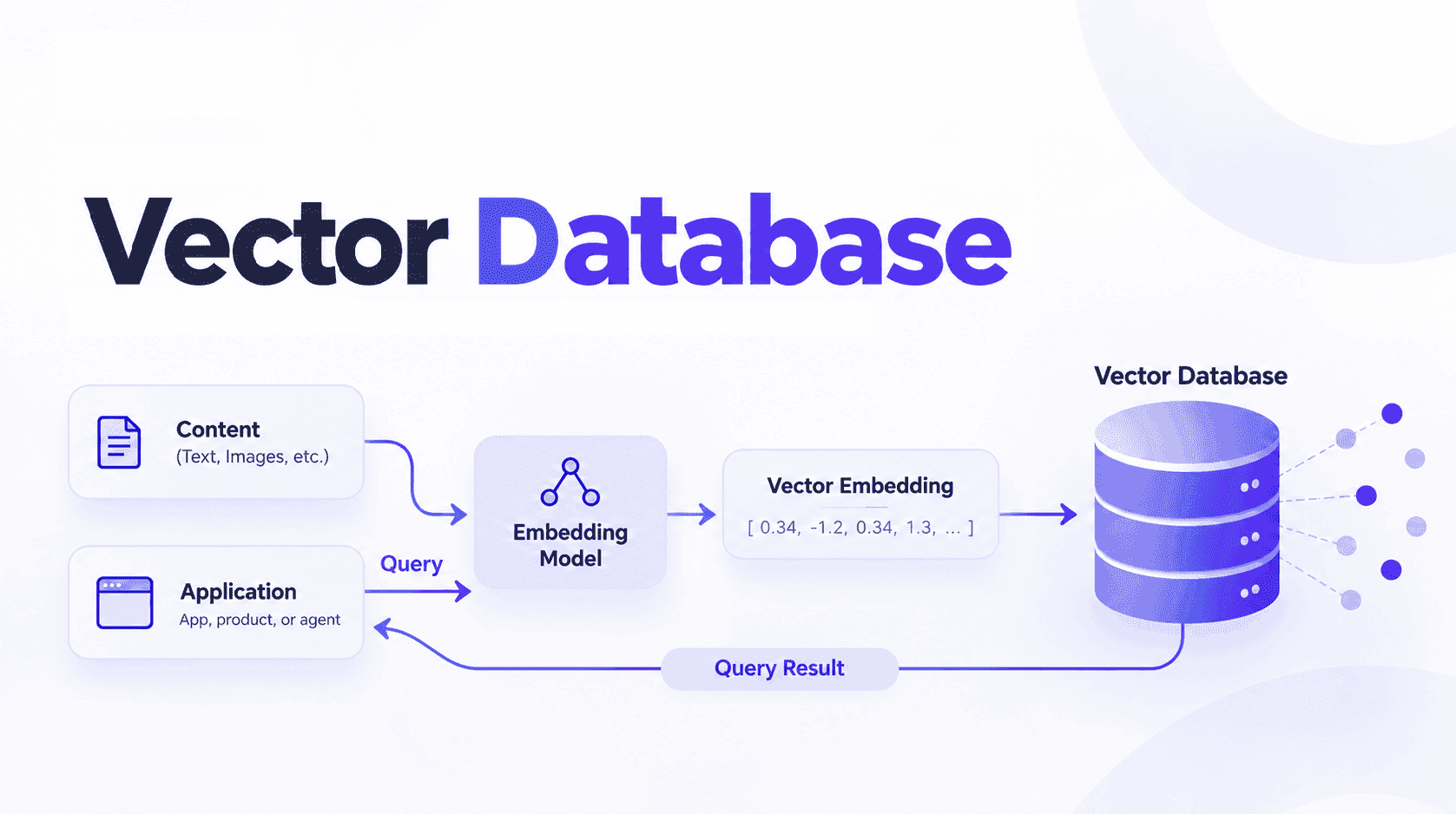
Retrieve: The user's query is converted into a vector embedding. The system searches a vector database (like Qdrant or Pinecone) for the most semantically similar chunks of text.
Augment: These retrieved chunks are pasted into the system prompt. For instance, System Prompt: "Answer the user's question using ONLY the following context."
Generate: The LLM generates an answer based on the injected context, not its internal weights.
This approach constrains the model's output space by providing explicit evidence to work from.
However, even with accurate retrieved context, RAG systems can still generate statements that conflict with that context. This failure mode occurs when internal "Knowledge FFNs" (Feed-Forward Networks storing parametric knowledge) overpower the "Copying Heads" (attention mechanisms focusing on the prompt), causing the model to ignore or misrepresent the retrieved evidence.
Advanced RAG: Retrieval Gating and Pipeline Optimization
Not every query benefits from retrieval. Unconditionally retrieving for every question can hurt both quality and latency when the retrieved context is off-topic or when the model already knows the answer. Retrieval gating solves this by deciding when to retrieve at all.
Modern systems use lightweight uncertainty signals to trigger retrieval only when needed. For example, by analyzing the model's confidence from a short draft response (measuring token entropy or the gap between top-1 and top-2 predictions), systems can adaptively retrieve only for uncertain queries, reducing retrieval calls by 70-90% while maintaining or improving accuracy.
A production-grade RAG pipeline typically follows this flow:
Query rewriting: Transform the user's natural language query into retrieval-optimized versions
Hybrid retrieval: Run BM25 (keyword-based) and dense vector search in parallel to balance exact matches with semantic similarity
Reranking: Apply cross-encoder models to the top 50-200 candidates to re-score by relevance
Evidence selection: Choose the most relevant chunks based on reranker scores
Generation with citations: Generate an answer that includes inline citations to specific retrieved passages
Verification pass: Use a secondary model to check faithfulness against the retrieved context
This architecture ensures both precision (finding the right content) and faithfulness (staying true to that content during generation).
Knowledge Graphs vs Vector Stores
While vector databases are excellent for semantic search (finding related text), they lack precision for structured relationships. If you ask, "How is Alice related to Bob?", a vector search might return documents mentioning both names but miss the specific sentence defining their relationship.
Knowledge Graphs (GraphRAG) solve this by storing data as nodes and edges.Alice --[works_for]--> Company). This allows for "multi-hop reasoning," where the system can traverse connections to find answers that aren't explicitly stated in a single document. For high-stakes domains, graph-based memory provides a higher level of grounding than vector similarity alone.
How Does Memory Act as Grounding?
When an LLM generates text without grounding, the probability distribution is flat and wide; there are many "plausible" next words.
But if we ask a question, "Who founded Company X?" and the AI memory layer injects specific context (e.g., "Company X was founded by Alice Chen in 2023"), the probability of the tokens "Alice Chen" spikes dramatically, and the probability of all other names drops to near zero, giving us more accurate responses.
Decoupling Context from Generation
A key breakthrough in reducing hallucinations is decoupling.
As discussed in the ReDeEP paper on ArXiv, researchers have found that hallucinations often occur when the model's "Knowledge FFNs" (Feed-Forward Networks storing internal facts) overpower the "Copying Heads" (attention mechanisms focusing on the prompt).
Effective grounding systems actively suppress the model's internal knowledge. We do this through "Context-Aware Decoding" or simply by using strong negative constraints in the system prompt:
"If the answer is not in the provided context, state 'I do not know'. Do NOT use outside knowledge."
Verification Loops
Grounding is not just about input; it's about output verification. Advanced memory systems implement a "Self-Correction" loop (often called Self-RAG).
Self-RAG trains models to retrieve on demand and evaluate their own generations using special "reflection tokens". The process works as follows:
Decide: Before generating, the model decides whether to retrieve based on the query type
Retrieve: If needed, retrieve relevant passages
Generate: Produce a response using the retrieved context
Critique: Evaluate both the retrieved passages (relevance) and the generated output (support, usefulness)
Refine: If the self-assessment scores are low, regenerate with stricter constraints or retrieve additional context
This approach has shown improvements in factuality and citation accuracy across multiple benchmarks compared to standard RAG.
Can We Measure Groundedness?
Measuring "hallucination" is difficult because there is no single ground truth for every possible question. However, we can measure faithfulness to the retrieved context.
The industry standard for this is RAGAS (Retrieval Augmented Generation Assessment), a framework that provides specific metrics for groundedness.
Retrieval Quality Metrics
These measure whether the right information was retrieved:
Context Precision: Measures whether relevant information was ranked high in the retrieval results (are the top-k documents actually useful?)
Context Recall: Measures whether the retrieved context contained all the information needed to answer the question (did we miss critical evidence?)
Generation Quality Metrics
These measure how the model used the retrieved information:
Faithfulness: Measures the factual consistency of the answer against the retrieved context. This metric checks whether every claim in the generated response is supported by the retrieved passages. Importantly, faithfulness measures consistency with the retrieved text, not truth in the real world—a response can be faithful to context and still be factually wrong if the retrieved documents themselves contain errors.
Answer Relevancy: Measures if the generated response actually addresses the user's question (is it on-topic?)
Citation Quality
Beyond generic faithfulness, production systems should evaluate citation quality: do the citations actually support each claim?
Self-RAG explicitly targets citation accuracy improvements by training models to reflect on whether retrieved passages support their generations.
RAGAS can run in a "reference-free" mode for metrics like faithfulness (comparing output to retrieved context), but benefits from labeled ground truth for metrics like context recall. Teams implementing grounded memory often see measurable gains in faithfulness scores when comparing baseline GPT-4 calls against RAG-augmented systems, though specific improvements depend on the domain, retrieval quality, and evaluation setup.
Where Grounding Still Fails
Even well-designed grounding systems face challenges that require explicit handling:
Contradictory Evidence: When retrieved chunks contain conflicting information (e.g., one document says "Product A costs $50" while another says "$75"), naive RAG systems may confuse the model or produce hybrid answers. Production systems need evidence arbitration strategies—prioritizing by source authority, recency, or explicit conflict-resolution prompts.
Missing Evidence: When the retrieval system finds no relevant context, models often still attempt to answer, leading to hallucinations. A proper abstention policy is critical: the system should explicitly state "I don't have enough information" rather than improvise. This requires testing the system's behavior on out-of-scope queries.
Noisy Retrieval: Irrelevant chunks in the context window can cause confident but off-target answers. This is why reranking is essential for filtering the initial retrieval candidates to ensure only high-quality evidence reaches the generation stage.
Security Risks: Grounded memory introduces new attack surfaces. Adversarial content in retrieved documents can contain prompt injections that manipulate the model's behavior. Data exfiltration can occur when tools leak sensitive information through citations. Memory poisoning is particularly relevant for systems like Mem0—if malicious or incorrect information gets stored as "user truth," it persists across sessions.
How Does Mem0 Reduce Hallucinations?
Mem0 takes grounding a step further by introducing stateful memory. Standard RAG is stateless; it retrieves documents but doesn't remember the user's specific history or changing preferences.
Hallucinations frequently occur due to Context Amnesia. The user says "I'm a vegetarian" in turn 1. In turn 10, the model recommends a steakhouse. The model didn't "lie"; it simply forgot the constraint because it fell out of the context window.
Mem0 solves this by maintaining a persistent user profile that evolves with every interaction.
The "Truth vs. Memory" Distinction
In a recent experiment on building reminder agents, Mem0 demonstrated a critical architecture pattern: separating "Facts" from "Memory."
This separation creates an explicit contract with three layers:
Immutable Facts (System of Record): Hard constraints that cannot be changed by the model (e.g., "Meeting is at 5 PM," "Refund window is 30 days"). These are typically sourced from authoritative databases or structured APIs. The model cannot hallucinate these because they are injected as direct database lookups.
Mutable Preferences (User State): Soft preferences that can evolve (e.g., "User prefers morning meetings," "User is vegetarian"). These are stored in the vector store and retrieved contextually. Mem0 tracks updates to these preferences and handles reversals.
Transient Session Context: Temporary information from the current conversation that doesn't need long-term storage (e.g., "User just asked about Italian restaurants").
By feeding the model both the hard facts and the soft memory context, Mem0 ensures the agent is both accurate and personalized. The system automatically filters out irrelevant memories that might confuse the model, reducing the "noise" that leads to hallucinations.
Memory Write-Path Safeguards
To prevent storing hallucinated information as ground truth, Mem0 implements several safeguards:
Deduplication: Before storing a new memory, the system checks for semantically similar existing memories to avoid redundant or conflicting entries
Reversal handling: When a user contradicts a previous statement (e.g., "I like blue" → "I hate blue"), Mem0 recognizes the conflict, applies recency bias, and updates the stored memory rather than keeping both
Source verification: The system distinguishes between facts stated by the user versus facts inferred by the model, storing only user-stated information or explicitly verified inferences
Temporal decay: Older memories can be weighted lower or archived to prevent outdated preferences from polluting current context
Conflict Resolution
What happens when memory contradicts itself? (e.g., User said "I like blue" yesterday, but "I hate blue" today). A naive RAG system might retrieve both and confuse the LLM, leading to a hallucinated hybrid answer.
Mem0 handles memory consolidation. It recognizes the conflict, prioritizes the more recent interaction (recency bias), and updates the vector store to reflect the new state. This ensures the "ground" the model stands on is solid, not shifting.
When to Work on Reducing Hallucinations in LLMs?
Legal Contract Review
In legal tech, a hallucinated clause is a liability. Agents use grounded memory to "cite their sources." When a lawyer asks, "What is the termination clause?", the agent retrieves the specific paragraph from the uploaded PDF. The generation is strictly limited to summarizing that paragraph. If the paragraph isn't found, the agent is blocked from answering.
Medical Diagnosis Support
Medical agents cannot rely on their pre-training, which may contain outdated medical journals. Instead, they are grounded in a real-time index of approved medical guidelines. GraphRAG architectures are particularly useful here, linking symptoms to diagnoses in a structured graph, preventing the model from inventing non-existent drug interactions.
Customer Support Compliance
Support agents must adhere to strict refund policies. By grounding the agent in a "Policy Memory," companies ensure the bot never hallucinates a refund offer that doesn't exist. If the user asks for a refund outside the policy window, the retrieved context explicitly says "No refunds after 30 days," forcing the model to deny the request regardless of how polite it wants to be.
Hallucination Cause, Symptom, and Control
Cause | Symptom | Control |
|---|---|---|
Fact not in training data, or weak weights | Model invents a plausible-sounding wrong answer | RAG grounding: inject the fact via retrieval |
Constraint falls out of the context window | Model contradicts something the user established earlier | Memory grounding: persist facts across turns and sessions |
Retrieved context conflicts with parametric knowledge | Model ignores or overrides correct retrieved context | Context-aware decoding, negative constraints in the system prompt |
Contradictory evidence across retrieved chunks | Model produces a confused hybrid answer | Evidence arbitration: prioritize by source authority or recency |
No relevant evidence found | Model answers anyway instead of abstaining | Explicit abstention policy |
Noisy or irrelevant retrieved chunks | Confident but off-target answer | Reranking before generation |
Wrapping up
Hallucinations are the byproduct of using a probabilistic model for a deterministic task. We cannot "train out" hallucinations completely, but we can architect them out.
With proper grounding of LLMs in external, verifiable memory systems, we change the nature of the generation process. We move from "creative writing" to "citations and summaries." Tools like Mem0 provide the infrastructure to make this grounding persistent and stateful, ensuring that your agents don't just know the facts, they remember them.
The future of reliable AI isn't in larger models. It's in better memory.
For a deeper look at how memory architectures are evolving, read about Short-Term vs Long-Term Memory in AI to see how to structure your system prompts for grounding.
Frequently Asked Questions
Q. What causes LLM hallucinations?
LLMs hallucinate because they're probabilistic next-token predictors, not truth engines. When a model encounters a question where training data is weak or absent, it generates the most statistically probable answer rather than admitting uncertainty. This is compounded by parametric knowledge bias, where the model's internal weights override even correct information provided in the prompt.
Q. How does RAG reduce hallucinations?
RAG (Retrieval-Augmented Generation) reduces hallucinations by decoupling knowledge from the model weights. Instead of relying on training data, the system retrieves relevant facts from an external database and injects them into the prompt. This constrains the model to generate answers based on verifiable, retrieved context rather than probabilistic guesses. Advanced RAG systems add verification loops, reranking, and retrieval gating to further improve accuracy.
Q. What is the difference between faithfulness and accuracy in RAG evaluation?
Faithfulness measures whether the generated answer is consistent with the retrieved context—does every claim have support in the provided passages? Accuracy measures whether the answer is factually correct in the real world. A response can be faithful to retrieved context but still wrong if the retrieved documents themselves contain errors. RAGAS provides separate metrics for both dimensions: faithfulness for generation quality and context recall for retrieval accuracy.
Q. When should a RAG system skip retrieval?
Not every query benefits from retrieval. Simple factual questions the model already knows ("What is 2+2?"), conversational queries ("Hello, how are you?"), or meta-questions about the system itself don't require external knowledge. Retrieval gating systems use uncertainty signals like token entropy or confidence scores to decide when retrieval is necessary, reducing unnecessary database calls by 70-90% while maintaining accuracy.
Q. How does Mem0 prevent hallucinations differently than standard RAG?
Mem0 adds persistent, stateful memory across sessions. Standard RAG is stateless and forgets user preferences once they leave the context window. Mem0 maintains three layers: immutable facts (system of record), mutable preferences (evolving user state), and transient session context. It handles memory conflicts through consolidation, applies recency bias for contradictions, and implements write-path safeguards to prevent storing model-generated guesses as user truth. This eliminates "context amnesia" hallucinations where the model forgets earlier constraints.
Q. What are the most common failure modes of grounded memory systems?
Even well-designed grounding systems fail when: (1) retrieved chunks contradict each other without arbitration logic, (2) no relevant evidence is found but the model generates anyway instead of abstaining, (3) noisy or irrelevant chunks pollute the context and mislead generation, and (4) security vulnerabilities like prompt injection in retrieved documents or memory poisoning where incorrect information gets stored as ground truth. Production systems need explicit handling for all four scenarios.
Q. What is retrieval gating and why does it matter?
Retrieval gating is the decision mechanism for when to retrieve external knowledge. Unconditional retrieval for every query wastes compute and can hurt quality when retrieved context is off-topic. Modern systems analyze the model's confidence from a short draft response, measuring token entropy or probability gaps, to trigger retrieval only for uncertain queries. This adaptive approach improves both latency and accuracy by retrieving only when necessary.
Q. How do you measure citation quality in RAG systems?
Citation quality evaluates whether inline citations actually support the claims they're attached to. Unlike general faithfulness metrics that check overall consistency, citation quality requires granular validation: does the citation support the specific sentence it follows? Self-RAG frameworks explicitly train models to generate reflection tokens that assess whether retrieved passages support individual statements, improving citation accuracy beyond baseline RAG systems.
Q. How does grounding help reduce hallucination in AI-generated answers?
Grounding reduces hallucination by injecting verified facts from an external memory or knowledge source into the model's context before it generates a response. Instead of relying on training weights to guess an answer, the model completes its response based on retrieved, verifiable data, shifting the probability distribution toward tokens actually supported by evidence, and away from plausible-sounding but unsupported completions. Grounding substantially reduces hallucination but doesn't eliminate it, since a model can still misuse or ignore correctly retrieved context, a faithfulness failure, not a factuality one.
Q. Why is an external memory system significant for the transition of a stateless AI application into an intelligent agent?
It persists information beyond what an LLM's context window retains within a single session.
Q. Does grounding eliminate hallucinations?
No. Grounding substantially reduces hallucinations by giving the model verified facts to draw from, but it doesn't guarantee elimination. Even with accurate retrieved context, a model can still generate output that conflicts with that context, a faithfulness failure rather than a factuality one. Production systems typically pair grounding with verification passes, reranking, and explicit abstention policies to close the remaining gap, rather than relying on retrieval alone.
More on Agent Memory

How to Read Memory Benchmarks
How to read AI memory benchmarks: what LoCoMo, LongMemEval, BEAM, and agentic tests measure, where scores go wrong, and how to find the correct benchmark for your use case.
20 min read

The Problem After Retrieval: Why Agents Misuse the Memories They're Given
Five papers show LLM agents often misuse the memories they retrieve. What the research says, how much to trust it, and what builders can do.
13 min read

What Is Memory Staleness in AI? Causes, Risks & Solutions
Understand memory staleness in AI agents, why outdated information leads to errors, and the best techniques to maintain accurate long-term memory.
9 min read




Taranjeet Singh
Taranjeet is the co-founder of mem0. His work centers on a question most LLM teams hit but few solve well: how do you give an agent durable, structured memory without ballooning context windows or sacrificing latency? His writing focuses on the practical architecture of memory-augmented agents, the tradeoffs between long context and retrieval, fact extraction at scale, schema design for episodic memory, and why benchmarks like LoCoMo and MemGPT often show such different results in lab vs production environments. He has spoken on these themes at the AI Engineer Summit, LangChain's Interrupt, and other developer conferences.
Start building with memory
Free tier, no card