Research

Mem0 Research:
Benchmarking Token
Efficient Memory Algorithm

Mem0 Research:
Benchmarking Token
Efficient Memory Algorithm

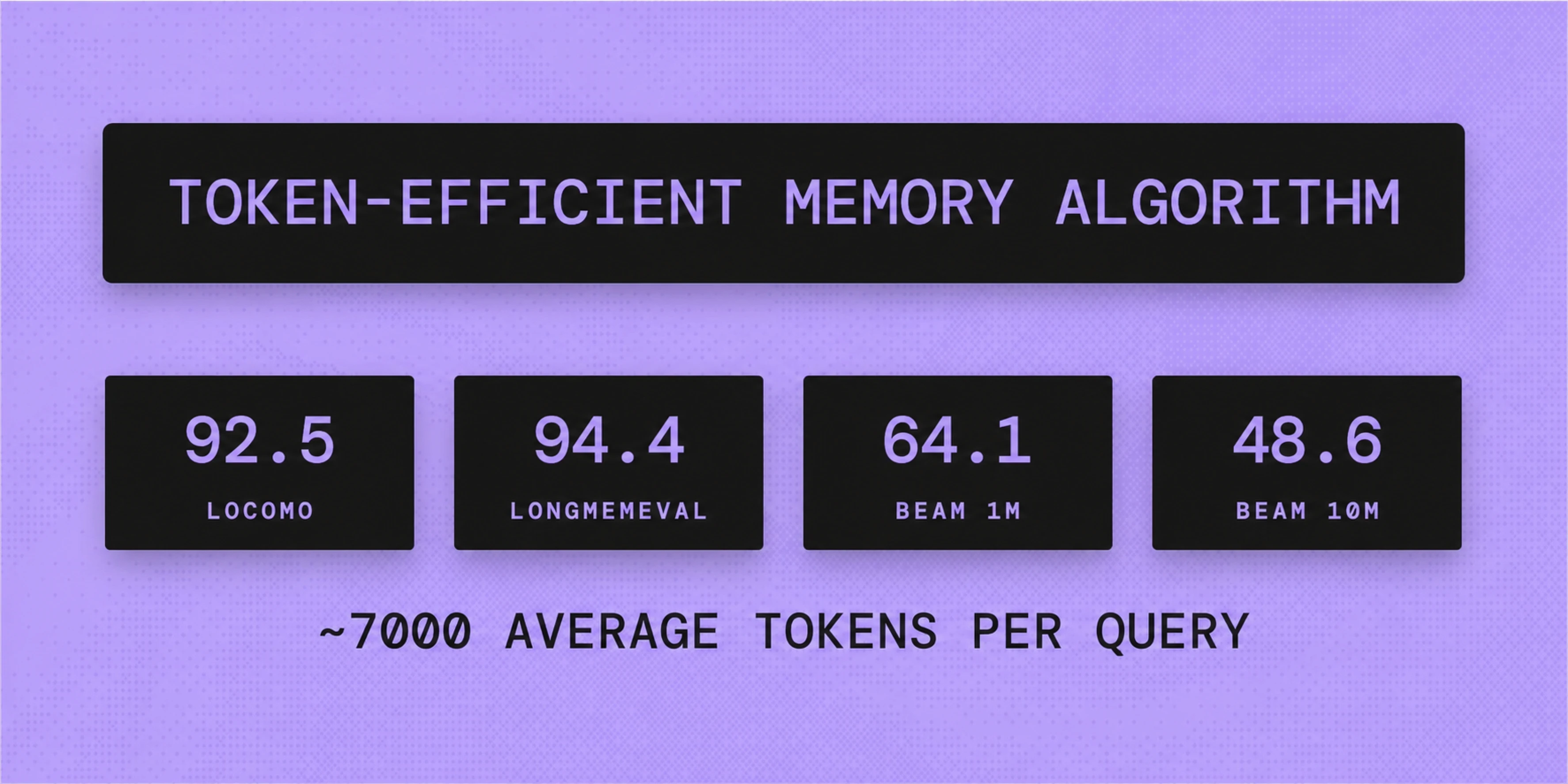
Benchmarked across LoCoMo, LongMemEval, and BEAM.

Powered by single-pass hierarchical extraction and multi-signal retrieval.

Benchmarked across LoCoMo, LongMemEval, and BEAM.

Powered by single-pass hierarchical extraction and multi-signal retrieval.

0.0
LoCoMo
0.0
LongMemEval
0.0
BEAM 1M
0.0
BEAM 10M
0.0
LoCoMo
0.0
LongMemEval
0.0
BEAM 1M
0.0
BEAM 10M

Mean tokens per retrieval call

Mem0

~6,900

Full-context

25,000+

Mean tokens per retrieval call

Mem0

~6,900

Full-context

25,000+

Benchmark

Benchmark
deep-dives

AI agent memory benchmark results across LoCoMo, LongMemEval, and BEAM

LoCoMo

LongMemEval

BEAM (1M)

BEAM (10M)

LoCoMo

1,540 questions 5 categories

Tests single-hop, multi-hop, open-domain,

and temporal memory recall across multi-session conversations.

92.5

Mem0 Score

6,956

Mean Tokens


Mean tokens: 6,956. Biggest gains on temporal (+29.3) and multi-hop (+25.2).

Single Hop

94.6

Multi-Hop

95.4

Open-domain Temporal

82.3

Temporal

92.5

Confidence interval

Confidence interval

±1 point, from judge-model inconsistency across runs.

±1 point, from judge-model inconsistency across runs.

Score source

Score source

Mem0’s managed platform. Open-source SDK gains are directionally similar, not identical.

Mem0’s managed platform. Open-source SDK gains are directionally similar, not identical.

Reproducibility

Reproducibility

Full eval harness published at

Full eval harness published at

Last updated

Last updated

April 2026

April 2026: matches the current

algorithm release.

Methodology

Why the numbers
look this way?

Each score above traces back to a specific piece of the architecture and not just asserted.

Recall Correctness

The ADD-only extraction never overwrites a fact, entity linking ties together mentions of the same person, place, or concept, and temporal reasoning reranks toward what's current. The right memory surfaces on the first retrieval call.

Context Footprint

Three retrieval signals, semantic, keyword, and entity, are scored in parallel and fused into one ranked result. Only the top matches enter the prompt, rather than the full conversation history, which is what keeps each call near 7,000 tokens instead of 25,000+.

Response Time

Memory decay's recency ranking runs fire-and-forget, and temporal reasoning does its classification at write time, so median latency stays flat at +1ms.

New

What’s new on Mem0?

What’s new on Mem0?

Four architecture changes to long-term memory for AI agents,

hierarchical fact extraction, multi-signal retrieval, and temporal reasoning working together.

Four architecture changes to long-term memory for AI agents, hierarchical fact extraction, multi-signal retrieval, and temporal reasoning working together.

Four architecture changes to long-term memory for AI agents,

hierarchical fact extraction, multi-signal retrieval, and temporal reasoning working together.

Single-pass ADD-only extraction

Extraction collapses to one LLM call that only adds, capturing the agent's own facts as first-class alongside the user's. No overwrite or delete step, so history survives intact with about 2x faster extraction.

Multi-signal retrieval

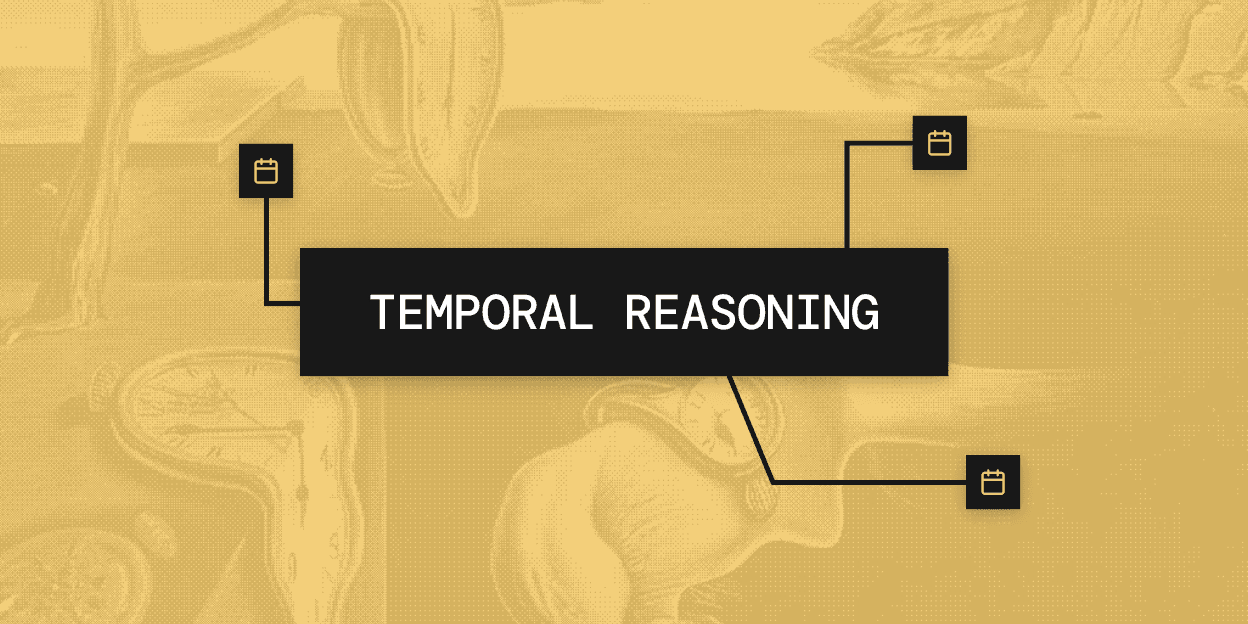
Temporal reasoning

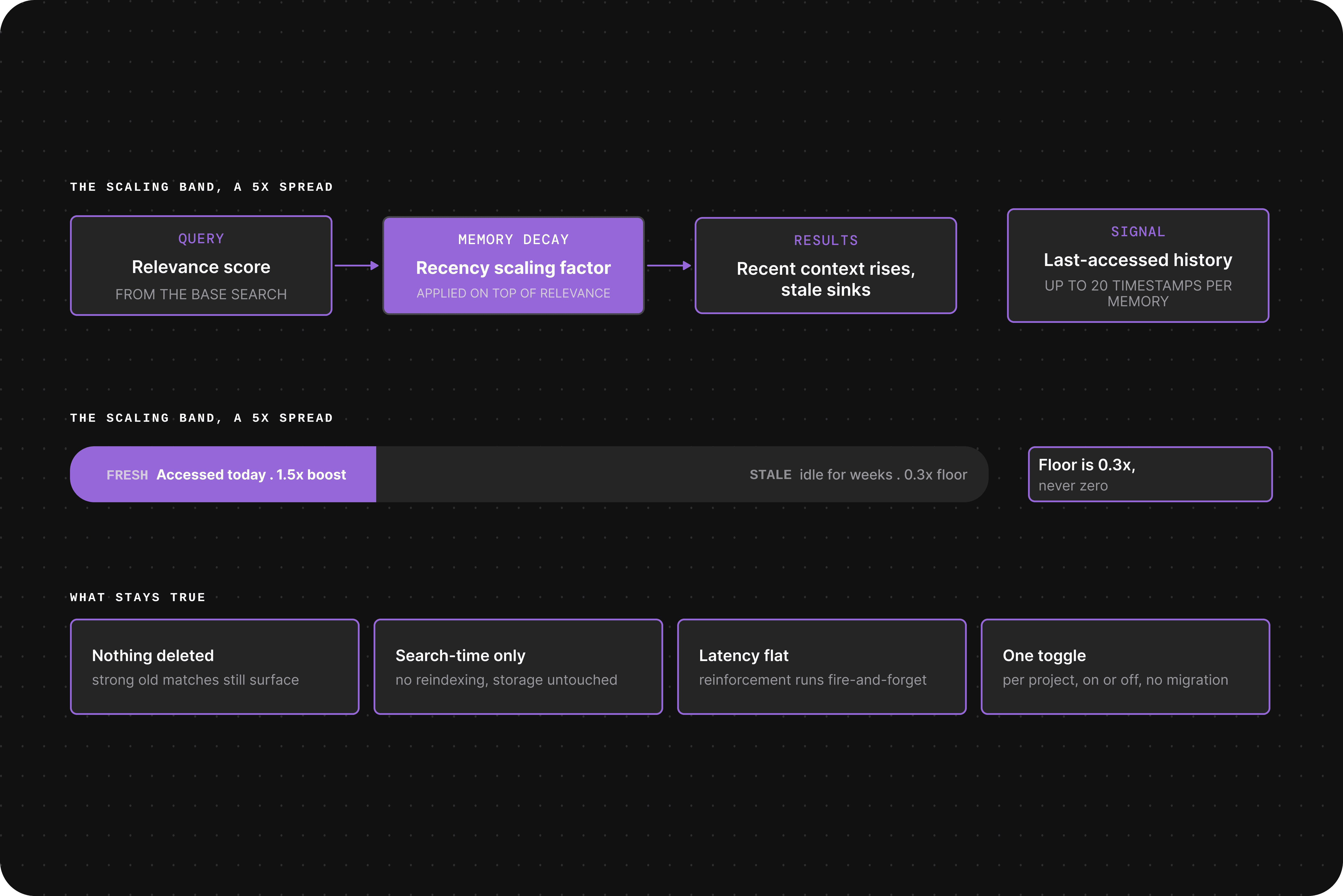
Memory decay

Single-pass ADD-only extraction

Multi-signal retrieval

Temporal reasoning

Memory decay

Recently-accessed memories get a soft ranking boost while idle ones dampen over time at zero search latency cost. Nothing is ever deleted or hidden.

Single-pass ADD-only extraction

Extraction collapses to one LLM call that only adds, capturing the agent's own facts as first-class alongside the user's. No overwrite or delete step, so history survives intact with about 2x faster extraction.

Multi-signal retrieval

Temporal reasoning

Memory decay

The Full Evaluation framework
is open source

The Full Evaluation framework is open source

The Full Evaluation framework
is open source

Every number on this page comes from a benchmark harness anyone can run, audit, or extend dataset loaders, judge-model config, and the exact run configs behind these results.