

·
14 min read
On this page
Standard RAG solved a real problem. It grounded language models in external knowledge so teams could reduce hallucinations and build AI applications that remained tethered to reality. But it was designed for simple queries. One search pass, one knowledge source, one shot at getting it right.
Production rarely works that way. Users ask questions that span multiple documents, require follow-up searches, or pull from both structured databases and unstructured content. When standard RAG hits these cases, it has no recovery mechanism.
Agentic RAG changes that. Instead of a fixed pipeline, it introduces autonomous agents that plan a retrieval strategy, run multiple search passes, validate intermediate results, and iterate before producing a final answer.
This guide breaks down what agentic RAG is, how it works, when it is worth the added complexity, and what teams get wrong when deploying it in production.
TLDR
Agentic RAG adds autonomous AI agents to the traditional RAG pipeline so the system can plan, retrieve, validate, and iterate before answering.
Standard RAG is fast and simple but limited to one-shot retrieval with no built-in recovery if results are weak.
Agentic RAG improves accuracy and multi-source reasoning through tool use, memory, and Reason–Act–Observe loops.
It is best for complex, multi-step, high-stakes queries, not basic FAQ bots.
Tradeoffs include higher latency, higher token cost, and more system complexity.
To succeed in production, teams must monitor retrieval quality, tool accuracy, step efficiency, and faithfulness.
Use agentic RAG when intelligence and adaptability matter more than speed and cost.
Why Standard RAG Breaks Down on Complex Queries
Retrieval-Augmented Generation combines a language model with external knowledge retrieval. The system embeds a user query, retrieves relevant documents from a vector database, and injects them into the prompt, so the model can generate a grounded response.
In most implementations, the flow looks like this:
User query
Vector similarity search
LLM generates an answer
For straightforward knowledge tasks, this works well. Standard RAG is simple to implement, relatively fast, and cost-efficient. However, two structural limitations appear in production.
First, vanilla RAG relies on single-pass retrieval. If the initial search misses important context, the system has no built-in way to recover. Answer quality becomes tightly coupled to retrieval quality.
Second, the pipeline is static. There is no planning, no adaptive reasoning, and no verification loop. The model cannot decide to search again, consult another source, or validate conflicting information. These limitations are exactly what agentic RAG is designed to address.
What Is Agentic RAG? Definition, Architecture and Key Differences
Before diving deeper, it helps to understand what AI agents are. An AI agent is a system that can interpret goals, make decisions, use tools, and take multi-step actions with limited human guidance. Agentic RAG builds on this capability by embedding agents directly into the retrieval pipeline.
Agentic RAG is a retrieval-augmented generation architecture where autonomous AI agents dynamically plan, retrieve, validate, and synthesize information across multiple steps instead of relying on a single fixed retrieval pass. Unlike traditional RAG, which follows a linear retrieve-then-generate pipeline, agentic RAG introduces reasoning loops and tool use to improve answer quality and coverage. The core shift is from a static pipeline to an adaptive system.
Standard RAG behaves like a one-shot search workflow. It retrieves context once and moves directly to generation. Agentic RAG behaves more like a research workflow. The system can interpret the query, decide how to search, run multiple retrieval passes, check intermediate results, and only then produce the final answer. This capability comes from the introduction of AI agents into the pipeline.
An agent typically includes:
Planning logic: The control layer that interprets the query and decides the next action. Instead of defaulting to a single vector search, the agent can choose the right strategy, such as semantic retrieval, SQL lookup, web search, or query decomposition. This improves retrieval precision on complex queries.
Memory: Memory maintains continuity across steps and sessions, with short-term memory preventing redundant tool calls and long-term memory persisting user preferences, prior outcomes, and learned signals that compound performance over time. This is where Mem0, an AI memory layer, adds strong leverage.
Tool access: Tools give the agent reach beyond static knowledge. The agent can query vector stores, hit APIs, run database queries, or execute code depending on the task. Tool use is what enables agentic RAG systems to operate reliably in real-world production environments.
Iterative reasoning: Agentic systems operate in loops rather than a single pass. Using Reason → Act → Observe patterns, the agent can re-retrieve when context is weak, validate intermediate results, and converge on higher-confidence answers. This is a key driver of accuracy improvements over vanilla RAG.
By introducing this agent layer, retrieval shifts from a fixed pipeline to an adaptive, self-correcting system.
The Four Layers of an Agentic RAG System
Agentic RAG is a stack of coordinated layers that work together at runtime. Breaking these components down makes system behavior easier to understand, optimize, and operate in production.
Orchestrator (Coordinator)
The orchestrator acts as the control plane, ensuring the pipeline adapts to each query instead of following a fixed path. It routes queries by intent and complexity, sending simple FAQs to retrieval agents and multi-hop analytical queries to planning or multi-agent workflows. It also selects the right tool, be it vector store, SQL, API, or web search, driving both accuracy and cost efficiency.
When confidence is low, retrieval adapts by re-querying, broadening search, or switching data sources. To prevent runaway loops and latency spikes, stopping criteria such as confidence thresholds, step limits, and token budgets ensure stable production behavior.
Frameworks such as LangGraph, LangChain agents, and CrewAI commonly implement this logic, though many teams build custom orchestrators for tighter observability and control.
Memory Layer
Memory maintains state across steps and sessions, avoiding redundant work and enabling better decisions. Short-term memory prevents duplicate retrievals, tool calls, and loops within a query. On the other hand, long-term memory persists user preferences, prior outcomes, and learned signals across sessions, enabling personalization and improved retrieval targeting.
Solutions like Mem0 make this layer scalable and production-ready. Without strong memory, agents repeat work, increase token usage, and lose efficiency.
Tool Layer
Tool access extends agentic RAG beyond static document retrieval. Agents dynamically choose data sources such as vector databases, SQL queries, web search, internal APIs, and code execution environments.
This enables multi-source questions, structured lookups, and real-time data handling while balancing accuracy, latency, and cost.
Validation Layer
The validation layer serves as a reliability checkpoint before generation. It checks relevance, detects conflicting sources, filters low-confidence context, and triggers re-retrieval when evidence is weak.
This verification step improves answer faithfulness and is a key advantage over vanilla RAG, which typically moves directly from retrieval to generation without structured validation.
How Agentic RAG Works: A Step-by-Step Walkthrough
Agentic RAG is best understood by tracing how a single query moves through the system at runtime. Unlike standard RAG’s fixed linear flow, agentic pipelines adapt based on intermediate results and confidence signals, allowing agents to plan, retrieve, validate, and iterate before producing a grounded response.
Step 1. Query Intake and Analysis
The system first interprets the user request. Instead of immediately embedding the query, the agent evaluates:
What information is being requested
Whether the query is multi-part
Which data sources may be required
This early reasoning step often improves downstream retrieval quality.
Step 2. Strategy Selection
Based on intent, data availability, and reasoning depth, the agent selects a retrieval strategy. Options include semantic vector search for unstructured knowledge, structured database queries for exact matches, hybrid multi-source retrieval, web search for external or fresh information, and tool invocation when APIs or external systems are needed. This planning phase is a defining difference between standard and agentic RAG.
Step 3. Retrieval Execution
The agent executes one or more retrieval passes and adapts dynamically to result quality and coverage. This stage may involve parallel searches across sources, iterative query refinement when results are weak, source prioritization by trust or signal strength, and tool calls to fetch structured evidence. If results remain insufficient, the agent retries with adjusted strategies, improving recall for complex queries.
Step 4. Intermediate Validation
Before generation, the retrieved context is evaluated for relevance, coverage, and consistency. Conflicts or gaps trigger additional retrieval or strategy changes. This loop is commonly implemented using a the ReAct framework, which follows the Reason → Act → Observe pattern.
Step 5. Response Synthesis
Once evidence quality is sufficient, the LLM generates a grounded response using validated context.
Step 6. Output With Citations
Production systems often add source attribution, confidence signals, and structured outputs for transparency and downstream use.
In contrast, standard RAG performs a single retrieval and generation pass without structured validation. While each additional reasoning loop improves depth and reliability, it also increases latency and token usage.
The Five Agent Types Inside an Agentic RAG Pipeline
Mature agentic systems use multiple specialized agents rather than a single monolithic agent, improving routing accuracy, reasoning depth, and system efficiency at scale. Here are the most common roles.
Routing Agent
The routing agent serves as the pipeline entry point, analyzing incoming queries to determine which data source, tool chain, or agent workflow should handle the request. By directing traffic early, it reduces unnecessary retrieval passes, lowering latency and token cost. In production, it often relies on lightweight classification or intent detection to make fast decisions before heavier reasoning begins.
Query Planning Agent
This agent handles complex or multi-hop questions that cannot be resolved with a single retrieval pass. It decomposes large or ambiguous queries into smaller, structured sub-queries that run sequentially or in parallel, improving coverage and evidence collection before synthesis. This approach is especially useful for financial analysis, legal research, and cross-document reasoning tasks that require stitching together multiple sources.
Tool-Use Agent
The tool-use agent extends beyond document retrieval by interacting with external systems and data sources. Typical actions include calling APIs for real-time or proprietary data, running SQL queries for precise structured lookups, performing web search for fresh external information, and executing code for calculations or data transformations.
When documents alone are insufficient, this agent bridges the gap between static knowledge and real-world system access.
ReAct Agent
The ReAct agent enables iterative reasoning through a Reason → Act → Observe loop, allowing the system to refine its approach across multiple steps. At each iteration, it can adjust queries, invoke different tools, or expand retrieval scope until sufficient evidence supports a high-confidence answer. This pattern is widely used in LangChain and LangGraph pipelines.
Multi-Agent Systems
Advanced deployments use a coordinator agent to manage multiple specialized agents, improving scalability, separation of concerns, and retrieval accuracy.
For example:
One agent for internal knowledge
Handles vector search and enterprise document retrieval.One agent for web retrieval
Fetches fresh external information when internal data is insufficient.One agent for structured data
Executes SQL queries or API calls against relational systems.
This architecture, known as multi-agent RAG, is increasingly common in production-grade enterprise environments.
Agentic RAG vs Standard RAG: How to Choose the Right Architecture
Agentic RAG architecture is powerful but not always necessary. Choosing the right architecture depends on problem complexity. Below is a practical decision guide.
Situation | Use Standard RAG | Use Agentic RAG |
Single knowledge source | Yes | Overkill |
Simple question answering | Yes | Overkill |
Multi-source retrieval | Limited | Strong fit |
Multi-step reasoning | Weak | Strong |
Strict latency requirements | Better | Consider tradeoffs |
Highest accuracy required | Maybe | Better |
Cost-sensitive workloads | Cheaper | Higher cost |
The key takeaway is simple. RAG agents add intelligence but also add overhead. Thus, systems should be right-sized to the task.
Latency, Cost and Failure Modes: What to Expect in Production
Agentic architectures introduce additional flexibility but also new failure modes that teams must account for in production.
Latency Multiplication
Each reasoning loop adds additional model calls and tool latency. In production environments, a multi-step agentic pipeline can be three to five times slower than vanilla RAG, especially under high concurrency. Performance budgets and timeout thresholds should be designed with this overhead in mind.
Token Cost Growth
More reasoning steps directly increase token consumption across prompts, tool calls and intermediate reasoning. At scale, this can materially raise operating costs compared to single-pass RAG, particularly in high-traffic workloads.
Retrieval Drift
If the initial retrieval is weak or misleading, the agent may pursue an incorrect reasoning path across subsequent steps. While strong validation layers can reduce this risk, drift remains a common failure mode in poorly tuned pipelines.
Tool Call Loops
Agents can occasionally get stuck repeatedly invoking the same tool without making forward progress. Production systems typically enforce loop guards, step limits and confidence thresholds to prevent runaway execution.
Context Window Pressure
Multi-step retrieval can flood the prompt with excessive context, which may degrade model performance and increase cost. Effective ranking, pruning and memory management are required to keep the working context tight.
Data Quality Dependency
Agentic systems cannot compensate for poor or outdated source data. If the underlying knowledge base is noisy, incomplete, or stale, the system will still produce unreliable outputs, often at higher computational cost.
How to Measure Agentic RAG Performance in Production
Evaluation practices for agentic RAG are still evolving, but several metrics consistently signal whether the system is behaving reliably in production.
Answer Faithfulness
Measures whether the generated response remains grounded in the retrieved evidence rather than drifting beyond it. This is one of the highest-priority metrics for production deployments.
Retrieval Precision
Evaluates whether the agent surfaced the most relevant chunks with minimal noise. Low precision often leads to diluted context and weaker final answers.
Tool Call Accuracy
Tracks whether the agent selected the correct tool at each step. Incorrect tool routing commonly increases latency, cost and failure rates.
Step Efficiency
Monitors how many reasoning loops the agent requires to complete the task. More steps do not necessarily indicate better reasoning, and often point to weak planning or routing.
Hallucination Rate
Compares model outputs against a verified ground-truth test set to quantify unsupported claims under real workloads. For a deeper look at how grounded memory directly reduces this metric, see our guide on reducing hallucinations in LLMs with grounded memory.
Observability
Production systems should log every major agent decision, including routing, tool calls, retrieval passes and stopping conditions. Without strong observability, diagnosing failures and optimizing performance becomes extremely difficult.
Tools such as LangSmith, Arize and OpenTelemetry integrations are increasingly common in mature agentic RAG stacks.
The Future of Agentic RAG: MCP, Multimodal and What Comes Next
Agentic RAG is advancing quickly with Model Context Protocol (MCP) and agent-to-agent protocols enabling standardized tool connectivity, improved agent coordination and more manageable multi-agent workflows. Multimodal retrieval now combines text, images and audio in a single pipeline, while smaller, faster models are making iterative agent loops more cost-efficient. At the same time, growing compliance demands are driving a stronger focus on agent observability and governance.
Move from Static Retrieval to Adaptive Intelligence
Agentic RAG extends traditional retrieval with planning, iteration and tool-driven reasoning, allowing systems to adapt strategies and validate evidence before answering. Standard RAG remains better for simple, single-source Q&A due to lower cost and complexity, while agentic RAG excels in multi-step reasoning, cross-source synthesis and high-reliability tasks.
However, agentic systems add overhead through higher latency, token usage, and observability demands, and require strong memory, routing, and validation to avoid new failure modes. In practice, teams adopt agentic RAG selectively, starting with standard RAG and adding agent capabilities only where adaptive reasoning provides clear value.
As orchestration frameworks mature, memory systems like Mem0 strengthen, and protocols such as the MCP standardize tool integration. Retrieval pipelines are shifting from static workflows toward adaptive, stateful systems that reason over time.
FAQs
What is agentic RAG?
Agentic RAG is a retrieval-augmented generation architecture where autonomous AI agents dynamically plan, retrieve, validate, and synthesize information across multiple steps.
How is agentic RAG different from standard RAG?
Standard RAG retrieves once and generates once. Agentic RAG uses reasoning loops, tool access, and memory to adapt its strategy mid-query, re-retrieve when results are weak, and validate context before generating a response.
When should I use agentic RAG instead of standard RAG?
Use agentic RAG when queries are complex, multi-step, or require multiple data sources and high accuracy. Stick with standard RAG for simple Q&A, cost-sensitive workloads, or when low latency is critical.
What are the main downsides of agentic RAG?
Higher latency (3–5x slower than vanilla RAG), increased token costs, greater system complexity, and new failure modes like retrieval drift and tool call loops.
What is a ReAct agent in agentic RAG?
A ReAct agent follows a Reason → Act → Observe loop, iteratively refining its retrieval and reasoning approach until it has sufficient evidence to generate a high-confidence answer.
How do you evaluate an agentic RAG system?
Key metrics include answer faithfulness, retrieval precision, tool call accuracy, step efficiency, hallucination rate, and system observability across agent decisions.
More on Context Engineering
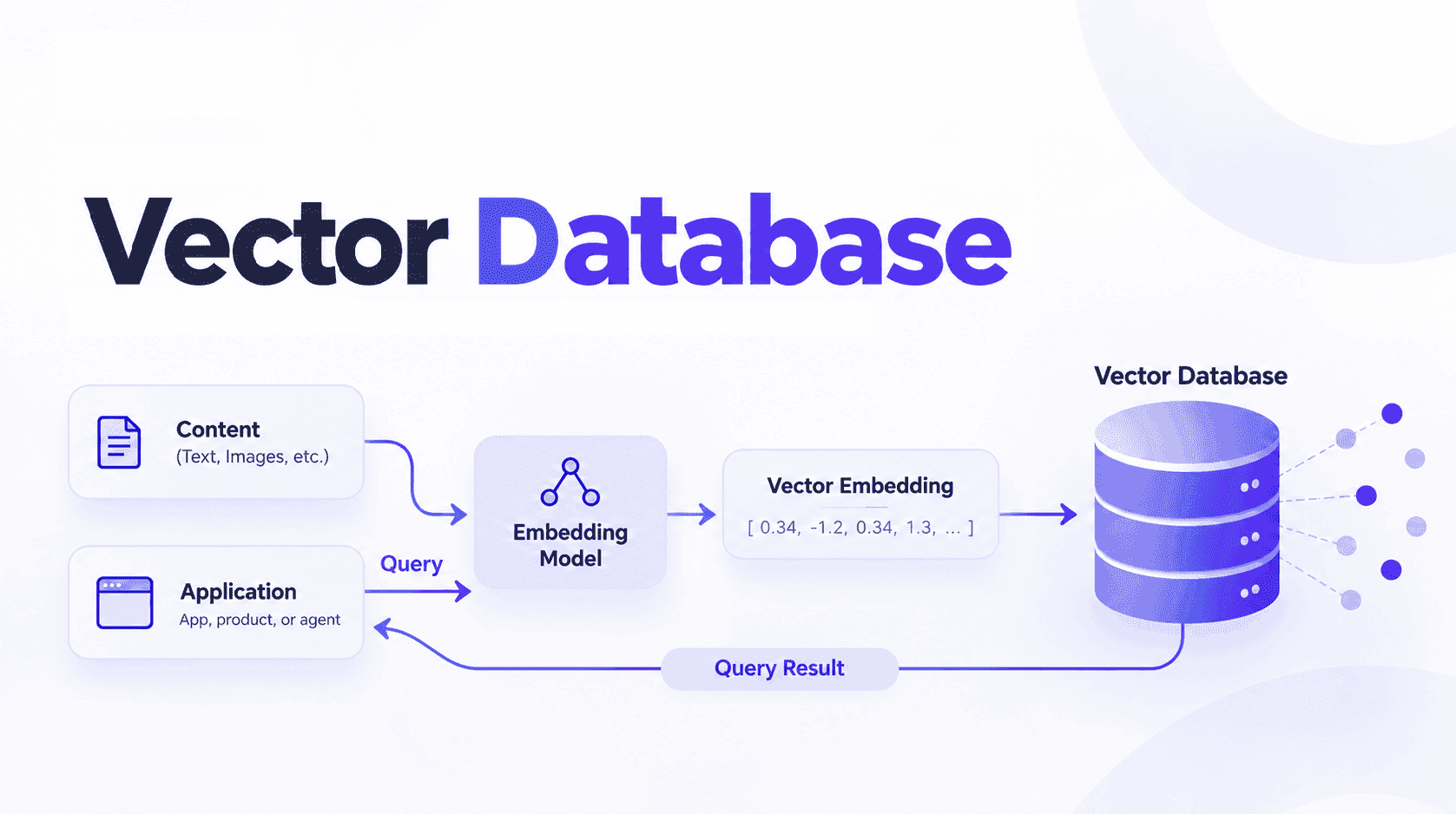
What Is a Vector Database & How Does It Work? Use Cases and Agent Memory
Learn what vector databases are, how they use embeddings and similarity search for RAG and AI agents, plus where a dedicated memory layer adds value.
25 min read

How to Reduce LLM Token Costs: The Persistent Memory Approach
Most LLM token costs come from re-sending conversation history. Here's how persistent memory cuts that by 60-90% with token counts and working code.
8 min read
Loop Engineering for AI Agents: Memory-First Design
Learn what loop engineering is, token-rich vs token-poor loops, and how Mem0 solves core memory challenges for production AI agents.
10 min read




Taranjeet Singh
Taranjeet is the co-founder of mem0. His work centers on a question most LLM teams hit but few solve well: how do you give an agent durable, structured memory without ballooning context windows or sacrificing latency? His writing focuses on the practical architecture of memory-augmented agents, the tradeoffs between long context and retrieval, fact extraction at scale, schema design for episodic memory, and why benchmarks like LoCoMo and MemGPT often show such different results in lab vs production environments. He has spoken on these themes at the AI Engineer Summit, LangChain's Interrupt, and other developer conferences.
Start building with memory
Free tier, no card